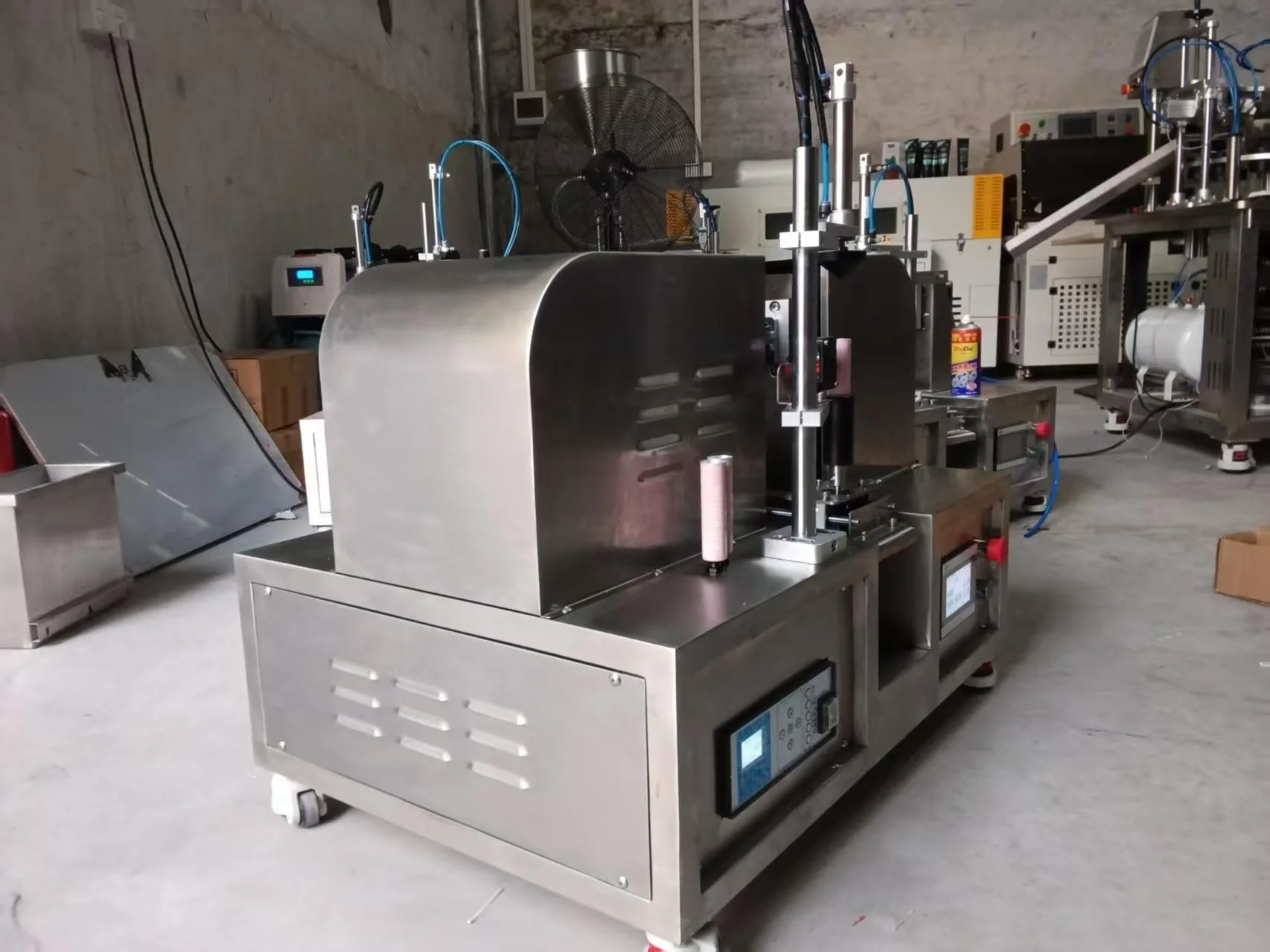
When buyers compare tube filling machines, they focus on the purchase price — but the real cost of a machine is spread across years of electricity, air, and maintenance. A slightly cheaper machine that costs more to run and breaks down more often ends up the more expensive choice. This guide explains where the ongoing costs come from and how to keep total cost of ownership low.
The Three Ongoing Cost Drivers
1. Electricity
Tube filling machines are relatively modest electricity consumers — the main loads are the drive motor, the heating elements for the seal jaws, and any ultrasonic generator if you use ultrasonic sealing. Heat-sealing jaws draw power only during the seal cycle; ultrasonic sealing is efficient because it generates heat only at the bond point. For a typical semi-automatic line, electricity is usually a minor cost relative to labour and materials, but it is worth confirming the rated power and whether the machine idles efficiently between cycles.
2. Compressed Air
Pneumatic tube filling machines run on compressed air, typically in the 0.5–0.8 MPa range. Air is not free — it is one of the most expensive utilities in a plant once you factor in compressor energy and leaks. If your machine is pneumatic, keep the air supply clean, dry, and at the correct pressure, and fix leaks promptly. Consistent air pressure is also essential for consistent seal quality, so a reliable supply pays for itself in fewer rejects.
3. Maintenance and Wear Parts
Every machine has consumable parts that wear and need periodic replacement: sealing jaws or heating elements, dosing seals and O-rings, and the anti-drip nozzle components. The good news is these are inexpensive relative to the machine, but you should budget for them and keep a small stock of spares so a worn seal does not stop your line. A machine with easily accessible, standard wear parts will have lower long-term maintenance cost than one that requires special tools or factory service for routine replacements.
How to Keep Total Cost of Ownership Low
- Match the machine to your real output — a high-speed automatic line you run at 20% capacity wastes money; a semi-automatic you push beyond its rated speed breaks down.
- Maintain air quality — filter and dry your compressed air to protect pneumatic components.
- Follow a cleaning and lubrication schedule — a few minutes a shift prevents most unplanned downtime.
- Stock common spares — sealing jaws, O-rings, and nozzle parts cost little but stop the line when missing.
- Ask about spare-part availability before you buy — a supplier with ready access to spares saves you weeks of downtime later.
The Bottom Line
Tube filling machines are not energy hogs, but compressed air and maintenance add up over a machine’s life. The most cost-effective machines are those that are simple to clean, use standard wear parts, and come from a supplier who supports you with spares and guidance after the sale. When you compare quotes, ask about rated power, air requirements, and spare-part pricing — not just the headline machine price.
What compressed air really costs on a tube line
Air is the utility buyers forget to meter, because it arrives through a pipe rather than a bill. Producing compressed air takes several times the energy of the electricity that ends up as useful work at the tool, and most of the loss is heat at the compressor, not at your machine. A tube sealer that clamps, lifts and blows with air is therefore worth measuring rather than estimating.
The cheap measurement: read the compressor’s load/unload cycle for an hour with the tube line running and with it stopped. The difference is your line’s share. Multiply by the compressor’s kW, by running hours, by your tariff and you have a monthly figure that is usually larger than the annual wear-parts bill — which is the argument for choosing a machine with low air demand over one with a lower purchase price.
Wear parts: inspect on a schedule, replace on evidence
No supplier can give you a replacement interval that survives contact with your product, because the interval depends on how abrasive the fill is, how many shifts you run and how well the operator cleans. What a supplier can give you is a list of what wears and what the failure looks like before it stops the line. That table is more useful than a number:
| Part | Early warning | What it costs you if ignored |
|---|---|---|
| Sealing jaw facing | Visible groove or polish line; seals start needing a higher temperature | Leakers at the rate of the worn segment, not the whole jaw |
| Ultrasonic horn / anvil | Weld time creeping up; inconsistent weld depth across the tail | Whole-shift rejects, then a horn replacement that is far more expensive than the anvil |
| Piston / dosing seals | Fill weight drifting up with a widening spread | Giveaway product on every tube, plus product in the pneumatics |
| Trim knife | Ragged flash, fibres on the tail | Cosmetic rejects that are only caught at the carton |
| Belts and grippers | Tube skewing in the nest; intermittent jams at one station | Micro-stops that never show on a downtime log but eat the shift |
Order the first set of wear parts with the machine. The freight on a small box is trivial next to three weeks of waiting for a jaw facing, and the parts you did not stock are always the ones that fail. A stocking list by platform is set out in tube filling machine spare parts & wear parts.
A cost-of-ownership sheet you can fill in before you sign
Six lines are enough to compare two quotes honestly. Fill them with your own tariff, your own shift pattern and your own downtime cost — the supplier can only give you the first two.
- Purchase and freight — including crating, insurance and the Incoterm you agreed.
- Installation and commissioning — power drop, air drop, floor, and the days the line is not producing.
- Electricity — nameplate kW is not consumption; ask for the measured draw at your cycle.
- Compressed air — measure it as above rather than accepting a figure.
- Wear parts per 100,000 tubes — the only figure that lets you compare a cheap machine with an expensive one.
- Downtime cost — hours stopped × the margin you lose per hour. A line that stops 4% more often can cost more than the price difference between two machines.
The maintenance side of the same ledger — what to do daily, weekly and annually — is in the maintenance checklist SOP, and the purchase-price side is in what sets the price of a tube filling machine.
“Which spare parts should I stock from day one” has a short answer in the buyer FAQ; the longer version is the stocking list in spare parts and wear parts.
Related guides: Tube filling machine cost factors · Troubleshooting · Output speed guide · The complete guide
Want a machine that’s cheap to run, not just to buy?
Tell us your output target — we’ll recommend a machine sized to your real needs, not the largest one we sell.