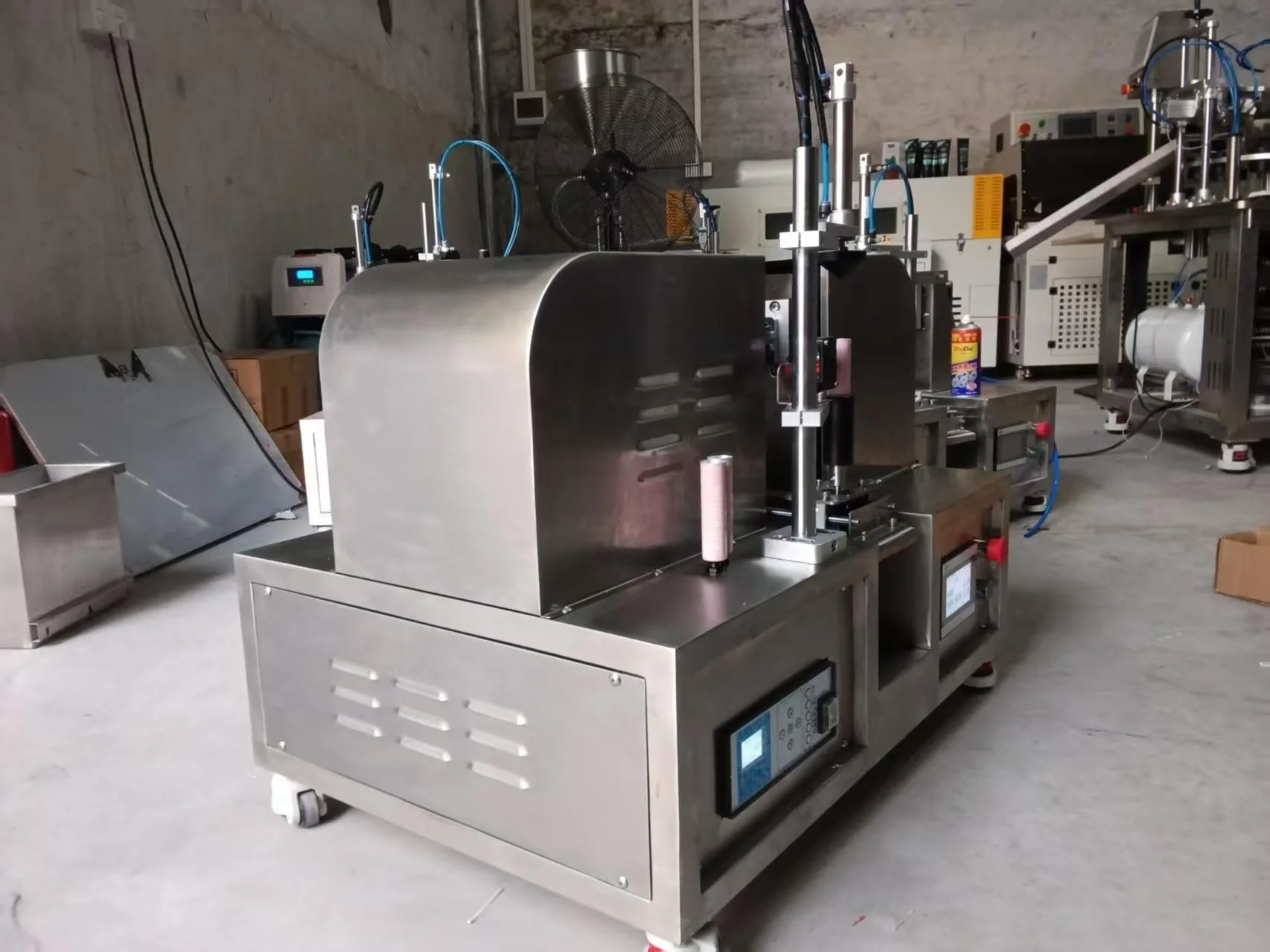
To specify a tube sealing or filling machine you need five numbers: tube diameter, tube length, tube construction, fill volume, and required output per shift. Everything else — tooling, dosing system, automation level, price — follows from those five. Get two of them wrong and the machine arrives unable to run your own tube.
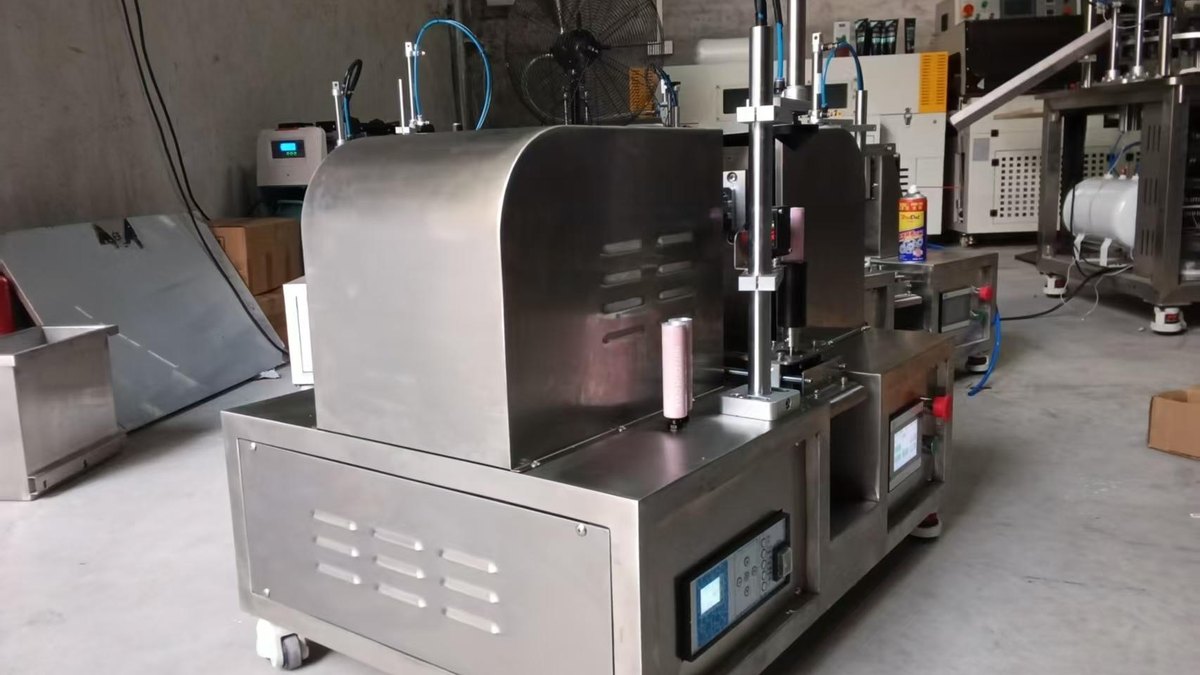
1. Tube diameter and length
These two numbers decide the tooling, and the tooling is the part that cannot be improvised after delivery. A machine quoted for 15–50 mm sealing diameter needs a different jaw and fixture set at each end of that range, and the fixture is what holds the tube square to the sealing head.
Measure the tube you actually buy, not the tube you plan to develop. Then measure the extremes of your range, because the widest tube you will ever run is the one that sets the tooling cost. If your range spans more than about 20 mm in diameter, expect the supplier to quote two tooling sets rather than one.
Buyers often quote the diameter of the cap, or the diameter printed on the tube carton, rather than the sealing diameter at the tail. On a tapered tube those are three different numbers. Measure the flat width of the tail and double it, or send the supplier a physical tube.
2. Tube construction — this decides the sealing process
The wall material determines whether the tail is closed by ultrasonic welding, by folding and crimping, or by hot-jaw sealing. It is not a preference; the material only accepts one of them properly.
If you are unsure which construction your tube is, cut one open. A metal foil layer is visible in ABL; pure plastic shows a uniform wall.
Send the supplier the tube datasheet if you have one. If you do not, send three tubes. A tube in the hand settles in thirty seconds what a week of email cannot.
3. Fill volume and product behaviour
Fill volume sets the dosing system. Two fills of the same volume can need different equipment because of viscosity, and viscosity is the number buyers most often leave out of an enquiry.
- Thin liquids and lotions need a positive-displacement or flow-meter system; a simple piston will drip and give inconsistent weights.
- Pastes and gels suit a piston filler with a follow-plate or a hopper with agitation, so the product does not bridge.
- High-viscosity ointments and adhesives need a larger bore piston and heated or pressurised feeding, otherwise the fill time becomes the bottleneck rather than the machine cycle.
- Products with particles need a valve design that will not crush or block, and the fill accuracy figure the supplier quotes will almost always be wider than for a smooth paste.
Ask for the fill accuracy as a tolerance on your product, at your fill volume, verified by weighing twenty consecutive tubes. A number quoted without a test method is not a specification.
4. Output per shift
Do not specify tubes per minute. Specify tubes per shift, then divide by the hours you actually run. A machine that claims 15 tubes per minute will not deliver 7,200 tubes in an eight-hour shift, because changeovers, breaks, cleaning and the occasional jam all take time out of the clock.
A realistic planning figure is sixty to seventy percent of the nominal rate over a full shift. If you need 8,000 tubes a day, plan for a machine whose nominal output is comfortably above that, not exactly at it.
5. Utilities and floor space
These are the two items that turn a good quote into a delayed installation. Confirm them against the building you actually have, not the building you plan to move into.
- Electrical supply and phase — single phase and three phase machines are not interchangeable, and a voltage change after the build is expensive.
- Compressed air pressure and consumption — most tube stations need 0.5–0.8 MPa, but consumption varies with cycle rate.
- Floor loading and levelling — an automatic line with a magazine and conveyor is heavy and needs a level floor, not a mezzanine.
- Clearance for guard opening and maintenance access — a machine that fits the room but cannot be opened for cleaning is a problem.
What to put in the enquiry
A single email with these six items will get you a firm quote instead of a range:
- Tube drawing or three physical samples, with the sealing diameter and total length marked.
- Tube construction (material and layer structure) if known.
- Product name, viscosity or a description of behaviour (pours, spreads, stands up in the tube).
- Fill volume per tube and the tolerance you must hold.
- Required output per shift, and the number of different products you change between.
- Destination country and site voltage, so the electrical build is right first time.
The two questions buyers most often forget
First: what happens at the start of a run? The first tubes after a changeover are usually scrap while registration and dose settle. Ask how many, because that number multiplied by your changeover frequency is a real annual cost.
Second: what is the wear part list and lead time? Jaws, sealing horns, trimmers and gripper pads all wear. A machine with a six-week lead time on its consumable is a machine that stops production for six weeks, eventually. Ask for the list and the price before you order, and order a spare set with the machine.
Questions buyers ask before ordering
Can one machine cover several tube sizes?
Do I need to send samples before ordering?
What fill accuracy is realistic?
How long should commissioning take?
Related reading
Related guides
- Fill accuracy: what ±1 g and ±1% really mean
- Machine output: picking the right speed for your volume
- Plastic, laminated or aluminium tube — choosing the material
- The complete guide to tube filling & sealing machines
- Tube sealing machine market: buyer’s view
Send the drawing — we will confirm the model and the tooling
Send the tube drawing or a physical sample and we will run it, then tell you which model, which tooling and what it will cost — before you commit to anything.