HTKC is the export brand of Guangzhou Tengyue Automation Equipment Co., Ltd., a packaging machinery factory at No. 54, Heting Middle Road, Renhe Town, Baiyun District, Guangzhou, China. It was founded in 2024 and works from a 500 m² assembly and test floor. It builds four machine platforms — ultrasonic tube sealing, mother-and-child tube filling and sealing, spouted pouch filling and capping, pillow-type shrink wrapping — and sells them factory-direct, with no trading company in between.
The short version
What this factory is, and what it is not
A buyer arriving from a search engine has a fair question: is this a factory or a reseller with a website? The honest answer, in the order it usually matters:
- A factory. Machines are assembled, wired and run-tested in Renhe, Baiyun District. There is no trading layer between the buyer and the bench, which is why a technical question gets an answer from someone who has physically set the machine up.
- Not a full-line integrator. Four platforms is a deliberate limit. Filling, sealing, capping and shrink wrapping are covered; cartoning beyond the standard stations, labelling, case packing and palletising are not built here. Those are quoted as sourced equipment when a line needs them, and that is stated as sourced rather than built.
- Not a catalogue of every packaging machine. If a request is outside the four platforms, the answer is no rather than a substitute machine relabelled to fit.
- Small on purpose. A 500 m² floor means one or two machines are in build at a time and each one can be run against the customer’s own samples. Scaling the floor up would mean scaling the test runs down.
How a machine gets built here
The sequence is the same for every order, and it is the reason the specification stage takes a few days rather than a few hours.
- Specification against the pack. Tube or pouch diameter, material and layer structure, fill volume, product viscosity, print registration, carton size and the output the line has to hit. These are confirmed in writing before a price is given, because a station that is close enough on pack size turns into scrap on the customer’s line.
- Sample run. Tubes or pouches are sent in and run on the machine. The customer gets the video and the parameters used — seal time or ultrasonic energy, jaw pressure, fill dose, tunnel temperature and belt speed — so the settings can be reproduced on arrival.
- Assembly. Frame, 304 stainless body panels, pneumatics, servo or stepper drives, PLC and touch screen. Wiring is numbered and matched to the drawing that ships with the machine.
- Power-on test. Every function is cycled under power: sealing, trimming, coding, filling, capping, conveying. Faults found here are fixed here.
- Packing and documentation. Wooden case, manual, wiring diagram, spare-parts list with part numbers, and the parameter sheet from the sample run.
The parameter sheet. A machine that arrives with the settings that were proven on your tubes starts producing on day one; one that arrives with factory defaults starts with a day of trial and error, and that day is where material gets wasted.
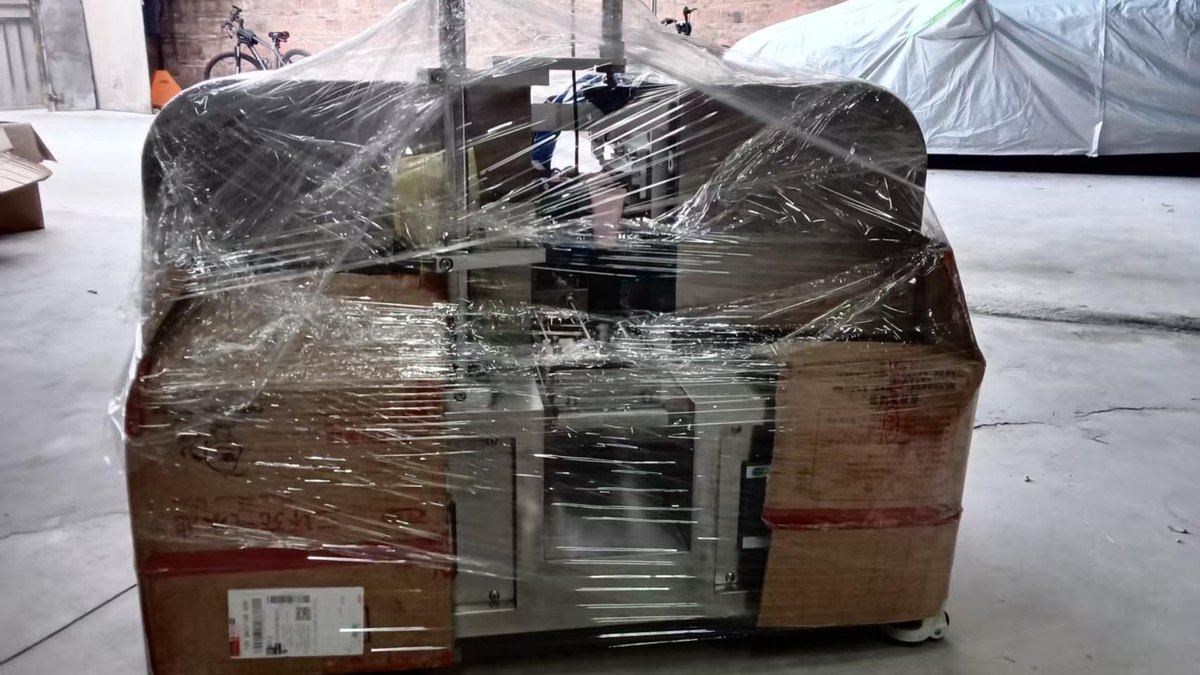
Quality control, stated plainly
There is no certification theatre here. What exists is a set of checks that catch the failures this class of machine actually has:
Service and spare parts
The machine carries a twelve-month warranty. Beyond that, support is built around the parts that wear:
- Installation guidance and parameter setup on arrival, remote by video call or written, against the parameter sheet from your sample run.
- Spare parts quoted by name and part number — sealing heads, crimping jaws, trim blades, registration sensors, heater cartridges, belts and grippers. The list ships with the machine so consumables can be stocked before the first failure rather than ordered in a panic.
- Wear-part advice by product, because the same machine eats jaws faster on an abrasive toothpaste than on a hand cream.
- Response through the same channel the order came in on — phone, WhatsApp or email, in English or Chinese.
Where the machines are used
The four platforms land in four different kinds of plant, which is worth knowing before assuming a tube sealer is a tube sealer:
How to work with us
The fastest path is a message with the pack specification in it. What arrives without that usually turns into four emails before a price is possible.
- Tube or pouch: diameter, length, material and layer structure
- Fill volume in millilitres, and the product’s viscosity
- Output required per shift, or per minute
- Print requirements: date, batch, expiry, and whether registration to artwork matters
- Destination port, and whether a wooden case is required
- Whether samples can be sent for a test run
Questions buyers ask before ordering
Is HTKC a factory or a trading company?
When was the company founded?
How large is the workshop?
Do you accept sample runs before an order?
Can I visit the factory?
What is the warranty, and what does it cover?
Related reading
Ask the factory directly
Technical questions get answered by the person who builds and tests the machine.