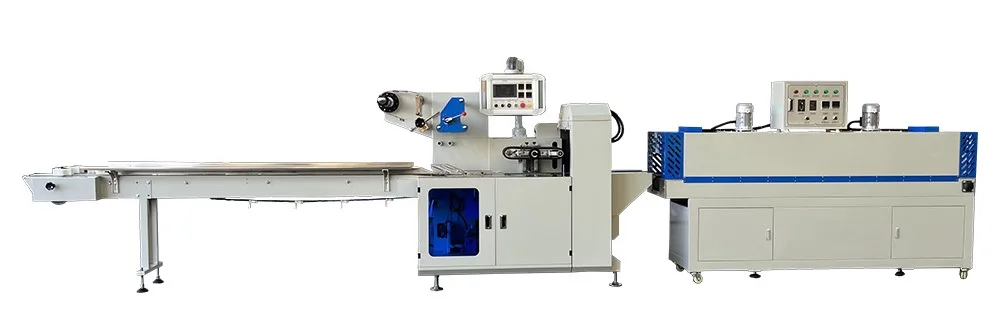
From US$1,000 · FOB Guangzhou
Final price depends on tube or pouch size, material and output. Send your sample specification for an exact quote.
A pillow-type shrink wrapping machine forms a film tube around the product, seals it, cuts it free and passes it straight into the shrink tunnel — all in one continuous flow. This platform runs 30 to 150 packs per minute on POF or PVC film, handling packs from a single bottle up to a multi-pack of instant noodles.
What the machine actually does
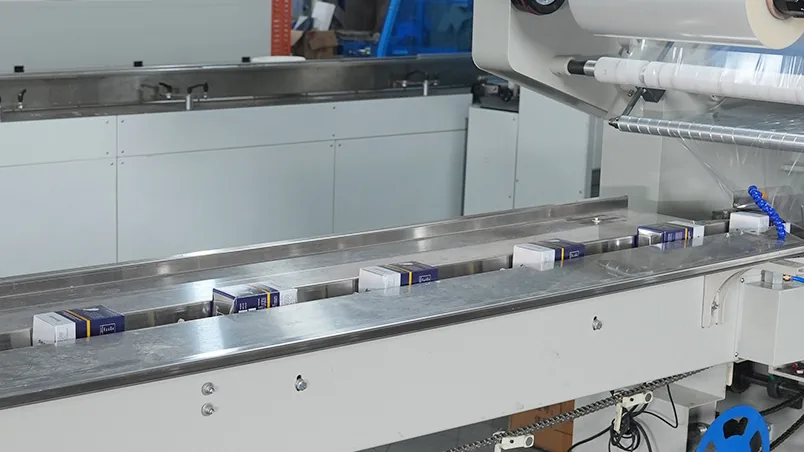
The product is fed onto the infeed conveyor and spaced by the lug chain. A film tube is formed around it, the end-seal jaw closes and cuts, and the wrapped pack moves into the shrink tunnel where the film tightens around the product and the seam closes.
Because the film is formed around the pack rather than pulled over it, the result is a tight, transparent wrap with no loose film at the ends — the finish retail buyers expect on a shelf, without a separate bagging step.
It is the machine that sits at the end of most of our lines: tubes, pouches or bottles go in, shrink-wrapped packs come out, ready for cartoning.
Line flow
Machine parameters
The 150 packs/min figure belongs to short packs and thin film. Long packs at the top of the length range run slower, because the jaw has to travel further per cycle. Tell us your pack size and we will tell you the honest rate for it, not the catalogue number.
Component detail
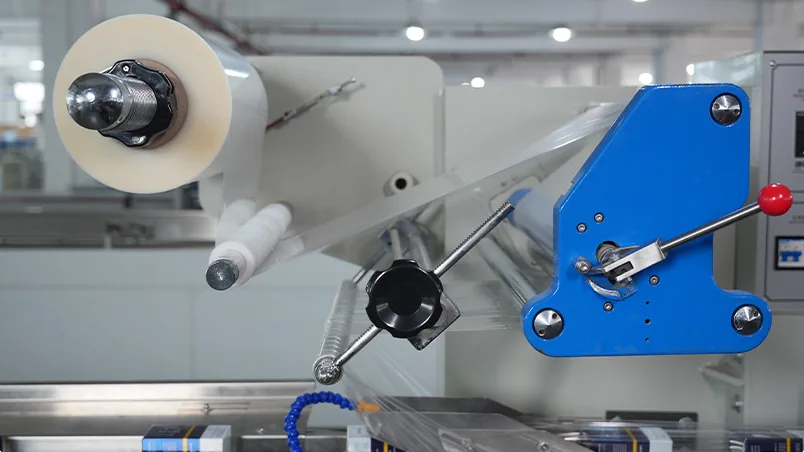
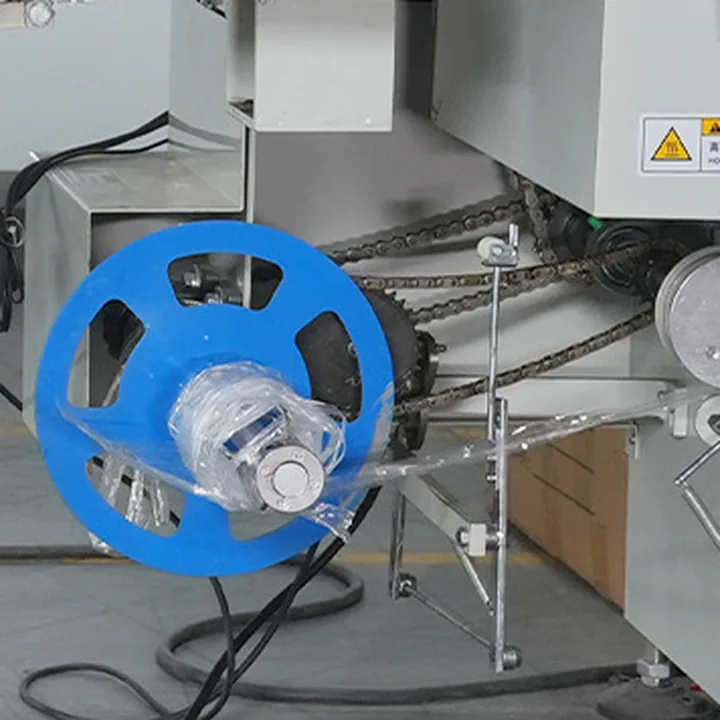
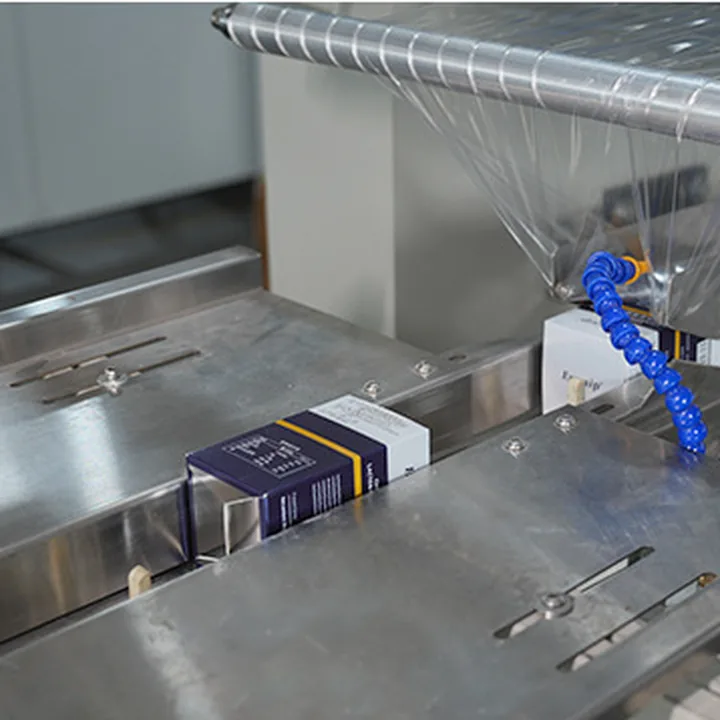
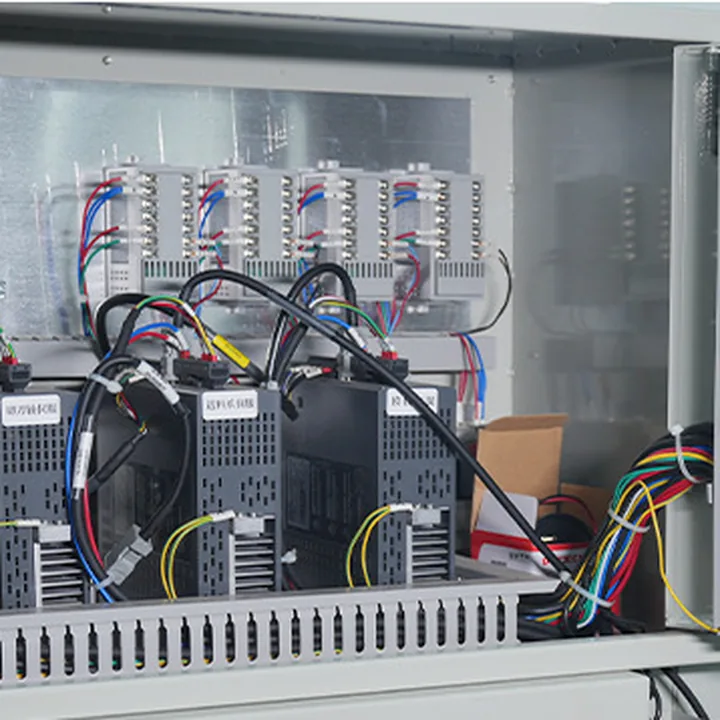
Four parts decide how a pillow-type shrink wrapper behaves over a shift: the film roll unit and its tension, the waste film take-up, the infeed that sets the spacing between products, and the drive cabinet that runs all of it. These are photos of the machine we ship, not a catalogue render.
Packs and products it runs
Film choice, and why it matters
This machine runs POF and PVC. They are not interchangeable in practice:
We quote the film together with the machine, because a wrapper set up for the wrong gauge runs badly no matter how well it is built.
What to send us for an accurate quote
Where it fits in a line
A pillow shrink wrapper is usually the last machine in the line: product in on a conveyor, a sealed and shrunk pack out. Nearly every setting on it follows from two things — the pack size and the film.
| Stage | What happens | What it needs from you |
|---|---|---|
| Upstream | Product arrives on the infeed conveyor, hand-fed or from the machine before it. Film comes off the unwind roll. | Product within 60–320 mm bag length and 10–200 mm width, and POF or PVC film on a core that fits the unwind shaft |
| This machine | Film is formed around the product, the jaw seals and cuts, and the pack passes through the shrink tunnel in the same frame. | Tunnel temperature and belt speed set for the film actually loaded, not for the last film you ran |
| Downstream | Shrunk packs go to cartoning or straight into a case. They need a few seconds to cool before packing. | Clear space at the tunnel exit for cooling |
| Optional | Eye-mark registration for printed film; a longer tunnel where packs are large. | Whether the film is printed, and where the eye mark sits |
Installation: what the site has to provide
- Power — 380 V, 50 Hz, 4.75 kW — three-phase.
- Floor — Approx. 4800 × 1170 × 1500 mm and 1140 kg. The frame is movable and the sections dismantle for transport, but check door widths and any lift on the route before it ships.
- Heat — The tunnel runs hot. Leave clearance above and to the sides, and do not box the machine into a corner — airflow is part of how the film shrinks evenly.
- Film storage — POF and PVC behave differently after a few weeks in a humid room. Store film sealed and flat; film that has taken up moisture produces the wrinkles people blame on the machine.
Changeover: what changes with a new tube or a new product
- Film grade, POF ↔ PVC — tunnel temperature and belt speed, saved as a recipe. Changing film without changing the setting is the single most common cause of a “faulty” wrapper.
- Bag length, 60–320 mm — jaw position and eye-mark setting.
- Pack size — conveyor guides and tunnel clearance.
Set the tunnel for the film, not for the pack. A wrapper that suddenly produces yellowed or brittle film has almost always had a film change without a temperature change. To see where this machine sits against the rest of the range, start from the machine index; if your product is a tube or a pouch, this guide covers what comes before the wrapper.
Troubleshooting: what the symptom tells you
Shrink wrapping faults are almost always a balance between three settings — tunnel temperature, belt speed and film grade. The symptom tells you which one has moved.
Set the tunnel for the film, not for the pack. Most “the wrapper is faulty” calls turn out to be a film grade change made without changing the temperature.
Questions buyers ask before ordering
Can it wrap more than one product per pack?
Do I need a separate shrink tunnel?
How much film will it consume?
Is it difficult to change over between products?
Related guides
- Machine output: picking the right speed for your volume
- How much a tube filling machine costs
- Building a complete turnkey filling line
- Maintenance checklist & SOP