HTKC builds four machine platforms in Guangzhou: a semi-automatic ultrasonic tube sealer, a fully automatic mother-and-child tube filler and sealer, a dual-head spouted pouch filler and capper, and an automatic pillow-type shrink wrapper. All four are factory-direct from Guangzhou Tengyue Automation Equipment Co., Ltd., and every unit is run-tested on your own tube or pouch samples before it ships.
What this page covers
This is the index page: one entry per machine, the packaging it is built for, the numbers that decide whether it fits your line, and where to read the full specification. If you already know your pack format, the table below will take you straight to the right platform.
Pick the platform by what you pack
Output figures are the rated range for the standard configuration; the number you get depends on fill volume, product viscosity and how the tubes are loaded.
Send the tube drawing, the fill volume in millilitres and the output your line has to hit. The answer is usually obvious from those three numbers, and we will say so rather than quote you the largest machine.
The four platforms in detail
1. Semi-automatic ultrasonic tube sealing machine — TY-001
A single-station sealer for plastic and laminated tubes. The operator loads one tube at a time; the machine seals with ultrasonics rather than heat, trims the tail, and prints the date and batch code in the same cycle. Because the sealing energy is delivered by a sonotrode rather than a heated jaw, there is no warm-up and no scorching of the print on laminated tube shoulders — the failure mode that makes heat sealers reject tubes at the start of a shift.
This is also the machine sold as an aluminium tube folding machine: with the folding jaw set fitted, it crimps and folds the aluminium tail instead of welding it. If you run both plastic and aluminium tubes, the same bench covers both with a tooling change. Full specification and parameters.
2. Fully automatic mother-and-child tube filling and sealing machine
The dual-chamber platform. Two servo piston fillers dose two different products into the two barrels of a mother-and-child tube, which is how two-component adhesives, hair colour and whitening creams are packed. Filling, sealing, trimming and coding run without an operator touching the tube.
The reason to buy this rather than two single fillers is registration: the two barrels have to be filled to a matched level, or the tube looks wrong on the shelf and the ratio between the two components is off. That ratio is set once in the recipe and held by the servo pair. Full specification and parameters.
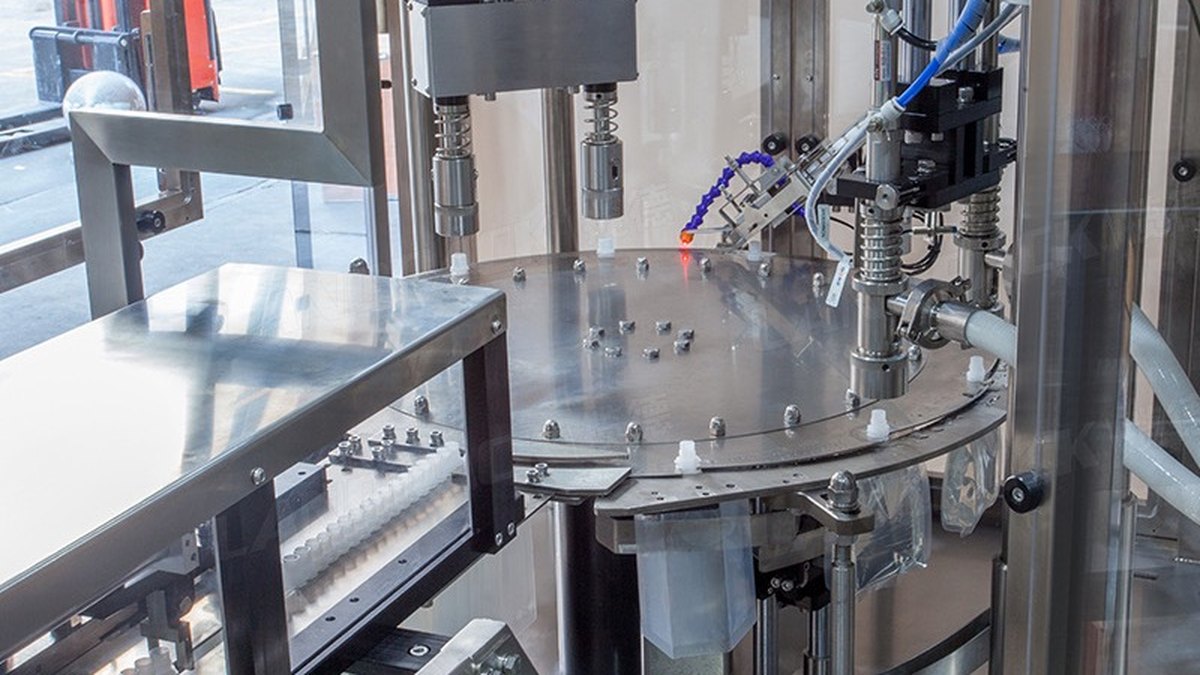
3. Dual-head spouted pouch filling and capping machine
For pre-made spouted pouches rather than tubes. Two filling heads dose at atmospheric pressure, then the cap is placed and torqued. Atmospheric dosing is the right choice for products with particulates or a high viscosity, where a piston filler would crush the pieces.
Fill accuracy is ±1% of the target volume, and the machine runs fully automatically once pouches are magazined. It is the station to look at if you are moving a tube product into a refill pouch, which is where a lot of cosmetic and dairy packaging has gone. Full specification and parameters.
4. Automatic pillow-type shrink wrapping machine
The end-of-line station: it wraps a tube carton, a bottle or a boxed set in POF or PVC film, seals a pillow-style bag around it, and shrinks the film in an integrated tunnel. 30–150 packs per minute, bag length 60–320 mm, 4.75 kW total.
POF is the default for retail packs because it shrinks evenly and does not yellow; PVC is cheaper and tougher, which is why it still shows up on hardware and industrial packs. Full specification and parameters.
What all four have in common
- One factory, not a trading layer. The person who answers your inquiry is the person who assembles and tests the machine. Quotes come from the bench, not from a catalogue.
- Run-tested on your sample. Tubes or pouches you send in are run on the actual machine, and you get the video and the parameters that were used — before you pay a deposit.
- PLC control with a touch screen. Recipes are stored per product, so changing from one SKU to the next is a menu selection rather than a mechanical reset.
- Wear parts are quoted by name. Sealing heads, crimping jaws, trim blades and registration sensors are listed with part numbers, so you can stock them before the first failure.
- Twelve-month warranty on the machine, with installation guidance and parameter setup included.
Guides for the decisions before the purchase
Four long-form guides sit behind these machines. They are written for the questions that come up before a purchase order, not for the brochure.
Related reading
Questions buyers ask before ordering
How many machines does HTKC make?
Can one machine handle both plastic and aluminium tubes?
What output should I expect in real production?
Do you supply the whole line or just one station?
How do I get a price?
Tell us the pack, we will tell you the machine
Tube diameter, fill volume, output per shift. Three numbers are usually enough to name the platform and the tooling.