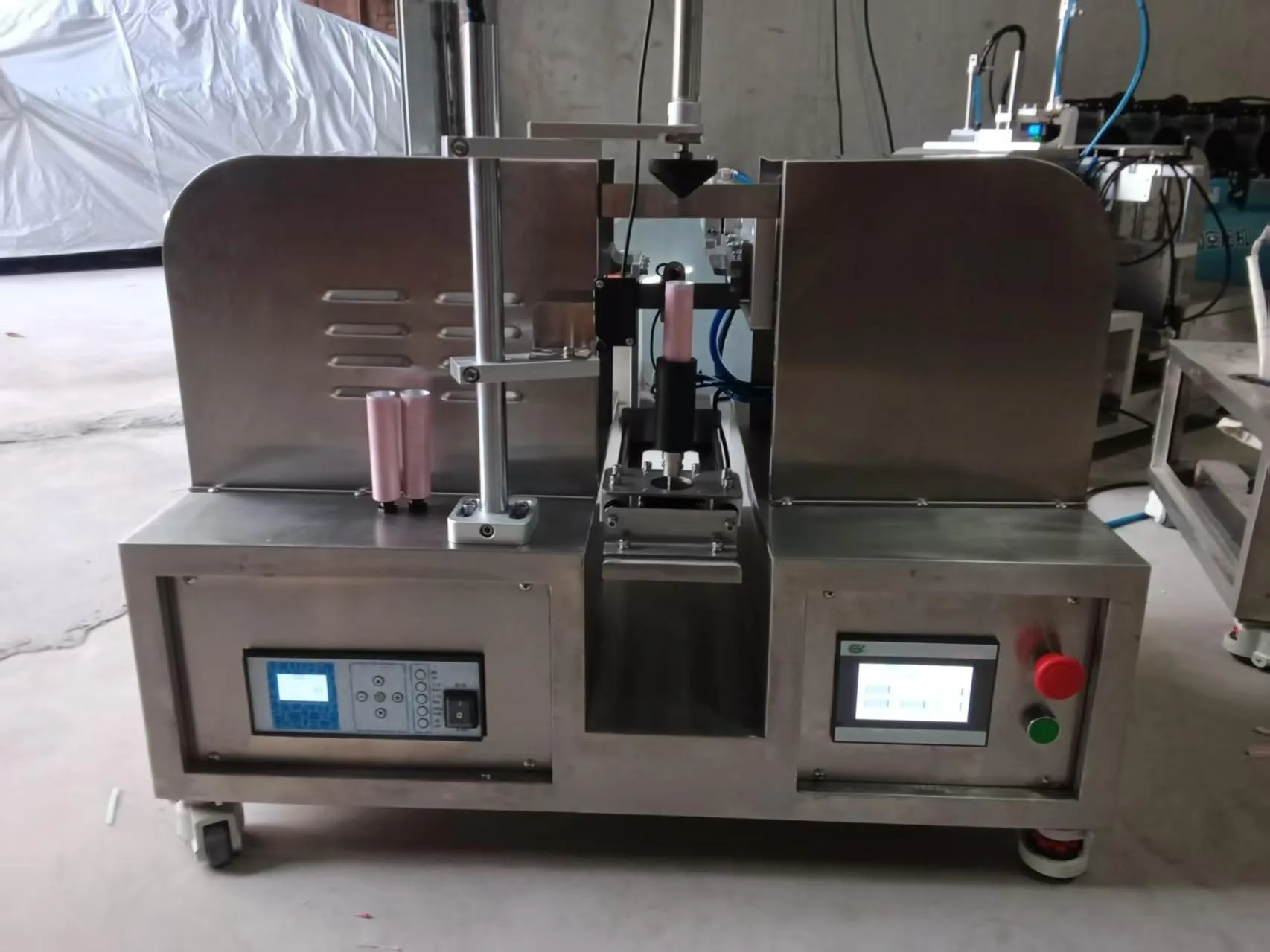
A tube filling and sealing machine will run reliably for years — if you maintain it. Most unplanned downtime comes not from major failures but from small, preventable neglect: a clogged filter, a worn O-ring, product buildup on the seal jaws. This guide gives you a practical maintenance routine, from a few minutes a shift to an annual deep service.
It is written so you can hand it to an operator as it stands. Each item has a check you can see or measure and an action that follows from it — a checklist without a decision rule is just a list of things somebody ticks.
Why the small stuff dominates
On a tube line the expensive failures are rare and the cheap ones are constant. A drive or a PLC fails once in years; a filter bowl fills with water every few weeks in a humid plant. What makes the cheap failures expensive is not the part — it is that nobody notices until a batch has been sealed badly and shipped.
That is the argument for a routine rather than a repair culture. The daily and weekly tasks in this guide exist to catch the three things that degrade quietly: seal quality, fill accuracy, and air pressure. Everything else on the machine tends to announce itself.
Daily checks (end of each shift)
- Clean the product-contact parts — hopper, dosing system, and nozzle. Remove product residue before it dries and hardens. Once a cream has set in a nozzle, cleaning it becomes a disassembly job rather than a rinse.
- Wipe the seal jaws — check for product buildup or debris that would affect seal quality. A film on the serration is the most common cause of a one-sided seam.
- Check the air supply — confirm pressure is in the correct range (0.5–0.6 MPa on our pneumatic machines) and drain any moisture from the filter bowl.
- Listen and look — unusual noise, vibration, or dripping during the shift is an early warning sign. Write down what you heard and when; a noise that only appears at high speed is information.
The daily list should take under fifteen minutes. If it takes longer, the product-contact parts are being cleaned too late in the day, or the wrong cleaning method is being used — both are process problems, not diligence problems.
Weekly checks
- Inspect seals and O-rings — look for wear, cracks, or signs of leaking around the dosing system.
- Check seal quality on a sample — run a squeeze or leak test to catch gradual jaw or temperature drift early.
- Lubricate moving parts — apply food-grade lubricant to the designated points per the manual. Designated means designated: lubricating a bushing that was not meant to be lubricated attracts product and dust.
- Inspect pneumatic fittings — check for leaks and tighten any loose connections.
- Clean the machine exterior — remove dust and residue, especially around electrical components and ventilation.
The weekly seal test is the one item people skip when they are busy, and it is the one that pays. A squeeze test on five tubes takes two minutes and detects a drifting jaw or a cooling heater while the machine is still producing acceptable product. Skipping it does not remove the drift; it only moves the discovery to the customer.
Monthly checks
- Verify fill accuracy — weigh a sample of filled tubes and confirm the dosing is within tolerance. On a servo piston machine that means checking against ±1 g; on HT220 the claim is ±1% at 20–50 tubes/min, so weigh enough tubes to see the spread, not just the average.
- Inspect the seal jaws or sonotrode — check for uneven wear or damage to the contact face.
- Check belts and drives — confirm tension and alignment are correct.
- Clean or replace air filters — dirty filters are the most common cause of pneumatic pressure problems.
Two of these are measurements and two are inspections, and it helps to keep them separate in the log. A measurement that trends is a warning; an inspection that passes is only a snapshot. If fill weight has been drifting upward for three months at the same dose setting, the trend is the finding — not whether this month’s sample passed.
Annual deep service
- Replace all wear parts — O-rings, seals, and nozzle components as a preventive measure, even if they still look acceptable.
- Inspect electrical connections — check terminals, wiring, and heating-element connections for signs of heat or corrosion.
- Full deep clean — strip down product-contact sections and clean thoroughly, including areas not reached in daily cleaning.
- Calibrate dosing — re-verify fill volume across the machine’s full range, not only at the dose you run most often.
- Check safety interlocks — confirm guards and interlocks function correctly.
Do the annual service in a planned stop, not in a quiet week. It is the only maintenance event where you take the machine out of production deliberately, and doing it under time pressure is how a deep clean turns into a reassembly error. The wear-part replacement is the part to do first, because it does not depend on what the deep clean finds.
The whole routine on one page
| Frequency | Task | Pass criterion | If it fails |
|---|---|---|---|
| Shift | Product-contact clean | No residue on hopper, nozzle, dosing path | Clean again before start; find why it set |
| Shift | Jaw wipe | Bare metal in the serration, no film | Clean with approved solvent, re-test seal |
| Shift | Air pressure and drain | 0.5–0.6 MPa at the machine, bowl dry | Drain, check filter, check compressor |
| Weekly | Seal sample test | Seam holds on squeeze, both sides even | Inspect jaw, check temperature, re-run |
| Weekly | Seals and pneumatic fittings | No cracks, no leak, no weeping joint | Replace from stock, log the replacement |
| Monthly | Fill weight spread | Within ±1 g or ±1%, no upward trend | Suspect seals first, then the pump |
| Monthly | Belts, drives, filter elements | Correct tension, clean element | Adjust or replace; do not run slack |
| Annual | Wear-part replacement | All seals, O-rings, nozzles renewed | Order before the stop, not during it |
| Annual | Calibration and interlocks | Volume verified across the range; guards active | Do not restart production until resolved |
The value of a written SOP
A written, dated maintenance log does two things: it makes the routine consistent across operators, and it gives you a record to spot drift before it becomes a failure. A machine with a simple maintenance SOP and a supplier who can guide you through it will pay for itself many times over in avoided downtime.
Three fields are enough to make the log useful: what was checked, what the reading or observation was, and what was done. A log that only records “done” is a compliance document; a log with a number in it is a diagnostic tool. When the fill weight column starts moving, you will know the month it started, and that is the month something changed.
Handover is where most routines quietly die. A five-minute handover — last fill weight, any noise noticed, any part changed — costs less than a shift of re-diagnosing the same problem three times. Keep it verbal and short, or it stops happening.
Three mistakes that undo a good routine
Using the wrong cleaning chemistry. A solvent that attacks the tube holder or the jaw coating creates the very seal defects the routine is meant to prevent. Confirm the approved cleaner for your product and your machine surfaces, and do not let a new operator improvise.
Adjusting the dose instead of finding the cause. Re-setting the dose to bring weight back into tolerance hides a worn seal behind a corrected number. If you re-adjust twice in a quarter, stop adjusting and inspect.
Running the annual service without the parts. A planned stop with the wear parts still in transit becomes an unplanned stop with a half-disassembled machine. Order the annual kit a month ahead — the day-one stock list in our spare and wear parts guide is the starting point.
FAQ
How long should the daily check take?
Fifteen minutes or less for the four items above. If it consistently takes longer, the cleaning is happening too late in the shift or the method is wrong — fix the process rather than extending the shift.
Do ultrasonic machines need the same routine?
Largely yes, with one substitution: the sonotrode takes the place of the jaw in the inspection items, and there is no heating element to check. The air, seals, and fill-weight items are identical.
Can maintenance be done by the operator?
Daily and weekly items, normally yes, with a short training session. Monthly inspection and the annual service are better done by whoever owns the machine technically — the value of those two is the judgement applied, not the labour.
What if we have no maintenance history at all?
Start with the daily four and the weekly seal test this week, and record the fill weight once. You cannot reconstruct history, but six months of one number will tell you more than any guess about the machine’s condition today.
Related guides: Spare & wear parts · Troubleshooting · Energy & maintenance cost · Seal quality and leak testing · The complete guide
Want a machine that’s easy to keep in top condition?
Tell us your product and output — we’ll recommend a machine with simple, serviceable maintenance.