The choice between a semi-automatic and a fully automatic tube filling line is decided by one number: how many tubes you need per shift, and how many different products you run in a week. Below roughly 3,000 tubes a day with frequent product changes, semi-automatic usually wins on cost per tube. Above that, or with a single product running for weeks, automatic pays for itself.
Where the break-even actually sits
Machine sellers like to quote output figures. Buyers should think in cost per finished tube instead, because that is the number that shows up in your accounts. Three things drive it:
- Labour per tube. A semi-automatic machine needs one operator who is occupied for most of the cycle. A fully automatic line needs one operator who supervises, and can look after two machines.
- Changeover time. Every product change costs production time. Semi-automatic changeover is short; automatic changeover involves tooling, recipe recall and a first-article check.
- Scrap rate. Manual loading produces more mis-loaded tubes. Automatic feeding is more consistent, but only once the tube magazine is set up correctly for your tube.
In practice, most factories below a few thousand tubes a day never recover the price gap between the two platforms. Above ten thousand a day, the labour saving alone usually covers it within a year or two.
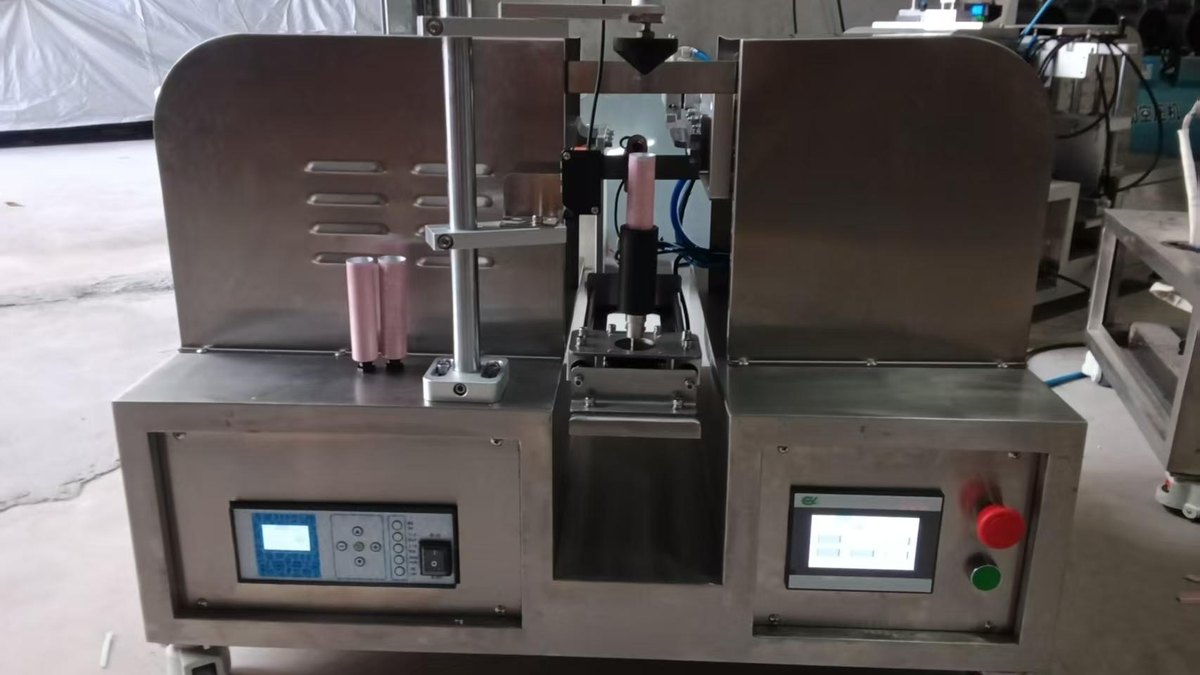
Side-by-side comparison
Figures are typical ranges for single-station tube platforms. Always quote against your own tube and product.
When semi-automatic is the right buy
- You run many SKUs in short batches — contract filling, sample production, private-label runs.
- Your product is high-value and low-volume, so labour cost per tube is a rounding error next to the fill value.
- You are starting out and would rather spend the capital on a second product line than on automation you cannot fill.
- Your tubes vary widely in diameter, so a magazine feeder would need constant re-tooling anyway.
- You need to be running within weeks rather than commissioning a line.
When fully automatic is the right buy
- One or two products run for weeks at a time, so changeover cost is amortised away.
- Your customer requires a documented, repeatable fill weight — automatic dosing with a saved recipe is easier to audit.
- You are already at the point where a second operator would be needed to keep a semi-automatic station fed.
- Your tube is a specialist construction (dual-chamber, for example) that cannot be loaded reliably by hand at speed.
- Labour is expensive or hard to retain where you are manufacturing.
Two semi-automatic machines cost less than one automatic line but need two operators, and two operators is a permanent cost while the machines are a one-off. Work out the five-year labour bill for both options before comparing the quotes. In low-wage markets the semi-automatic answer usually holds much longer than sellers expect.
The middle ground most buyers should consider
Between the two extremes sits the configuration most growing factories actually end up with: a semi-automatic filling and sealing platform plus a second identical unit, sharing one operator who loads both in sequence. It gives you redundancy (one machine down does not stop production), it scales in steps you can afford, and changeover stays short because each machine can hold a different product.
The trade-off is floor space and the fact that you are still paying for labour per tube. If your volume keeps climbing past roughly ten thousand tubes a day, that configuration stops making sense and a magazine-fed automatic line is the correct answer.
What to ask both suppliers
- What is the measured output on a tube like mine, not the catalogue figure?
- How long does a product change actually take, from last good tube of product A to first good tube of product B?
- What is the scrap rate during the first hundred tubes after a changeover?
- Which wear parts need replacing, how often, and what do they cost?
- Can you run my tube and my product before I place the order, and send video of the result with the parameters?
Questions buyers ask before ordering
Can a semi-automatic machine be upgraded to automatic later?
Is automatic always more accurate?
How many operators does an automatic line need?
What about a tube that our operator keeps mis-loading?
Related reading
Related guides
- Machine output: picking the right speed for your volume
- Tube filling machine by product type
- The complete guide to tube filling & sealing machines
Tell us your daily volume — we will tell you which platform fits
Send the tube drawing or a physical sample and we will run it, then tell you which model, which tooling and what it will cost — before you commit to anything.