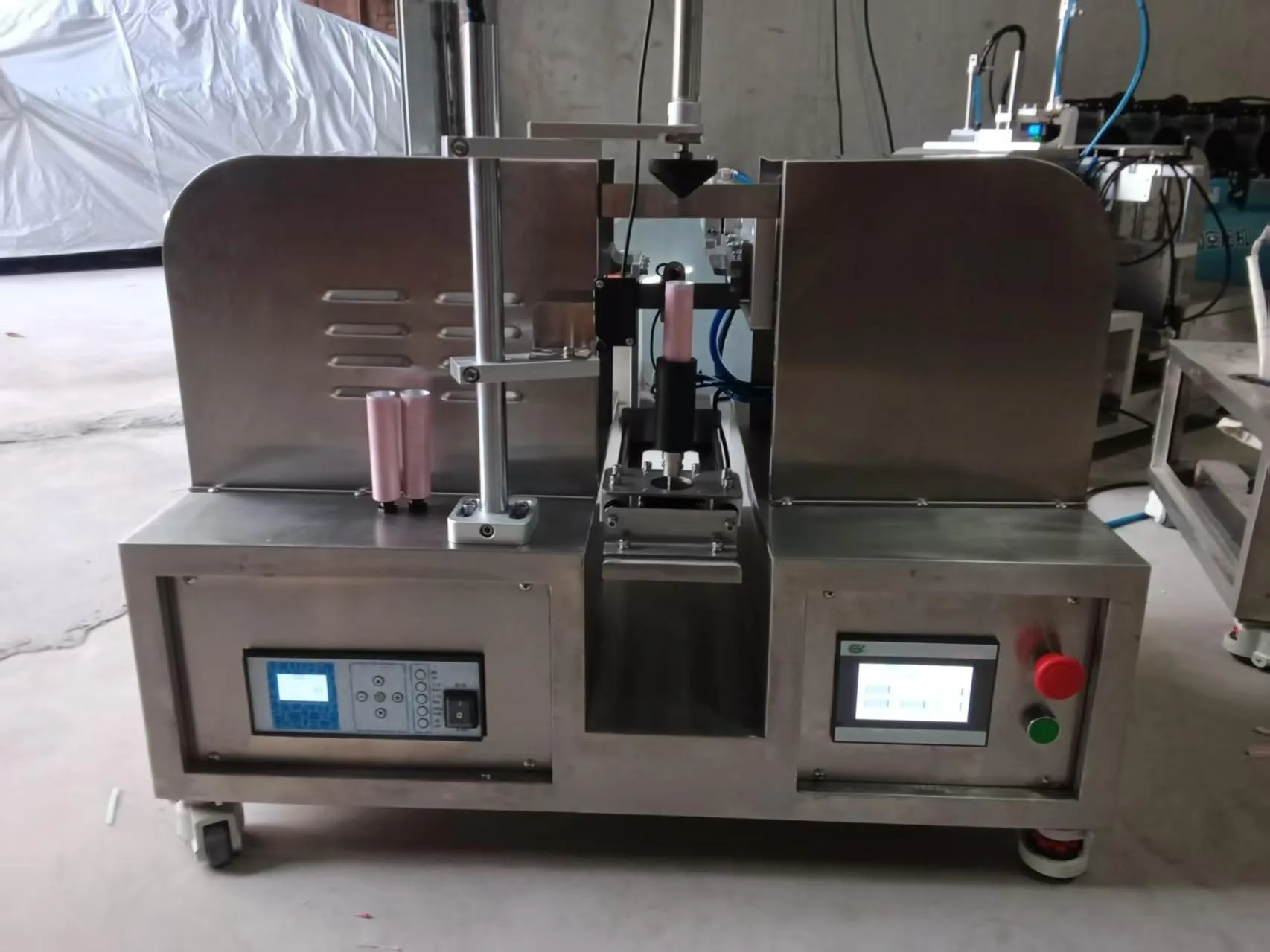
Most faults on a tube filling and sealing machine come down to a handful of root causes — product, air pressure, or a sensor out of alignment. This guide walks through the common symptoms, what they usually mean, and the first checks to make before you call for service.
The order matters as much as the checks. An operator who starts by turning the temperature up because the seal leaks usually makes two problems out of one: the leak continues, and the print on the tail is now scorched as well. What follows is arranged so that the cheapest, most reversible checks come first and parameter changes come last.
The three families of fault
Almost every symptom on a tube line traces back to one of three places, and each is corrected somewhere different on the machine:
Product. The product is in the wrong place (on the seal zone), has changed (viscosity, temperature, a new batch), or contains air. This family is corrected at the nozzle, the hopper or the dosing system — never at the sealing station.
Air pressure. Tube machines are pneumatic at the point where it matters: the jaw closes, the tube is ejected, the interlock releases. Pressure that has drifted low produces false stops and weak seals at the same time, which is why it is checked early.
Position. A sensor, a jaw, or a tube that is not where the machine expects it. The colour-mark electric eye that registers the tube, the jaw alignment, the tube sitting slightly askew in its holder — all of these produce faults that look like sealing faults but are mechanical or optical.
Naming the family first is what makes the rest of this page fast to use. Leaking and drifting fill volumes are product problems. A machine that stops for no visible reason is a pressure or position problem. Scorched print is the one that is genuinely a sealing-station problem.
A triage order that costs nothing
Before touching a single parameter, four questions narrow the fault down more than any instrument:
- Is it every tube, or some tubes? A fault on every tube is a setting or a material mismatch. A fault on some tubes is position, contamination or supply — and it will usually be reproducible at the same station number.
- Did it start at a change, or creep in? A step change points at a batch, a roll of tube, a shift handover, or a parameter someone adjusted. A gradual drift points at wear — seals, a filter, a pump.
- Is the fault on the same station every revolution? If yes, the cause is local to that jaw, holder or nozzle, not to the machine as a whole.
- What does the pressure gauge read while the machine is running? Not at rest — while running. A gauge that reads correctly at idle and falls during the cycle is the single most common false-stop cause.
Answers to those four questions usually identify the family before you open the guard. They also give you the sentence you need when you do call support, which shortens remote diagnosis considerably.
Symptom to cause: the short map
| Symptom | Usual cause | First check | Escalate when |
|---|---|---|---|
| Tube leaks after sealing | Material/process mismatch, product in the tail, low heat or pressure | Confirm tube material against sealing method; wipe the tail zone | A clean, matched tube still leaks at nominal settings |
| Seal holds but is weak | Marginal temperature, dwell or horn pressure | Squeeze and pull test on a sample; compare across stations | Strength varies station to station at identical settings |
| Scorched or distorted print | Too much heat or too long a dwell | Reduce jaw temperature or hold time — one at a time | Scorch persists at the lowest workable temperature |
| Fill volume drifts over a shift | Air in the line, worn seals, viscosity change | Bleed the dosing system; weigh samples at start and end of run | Drift continues after bleeding and recalibration |
| Machine stops, “no tube, no fill” trips | Low air pressure, dirty or misaligned colour-mark eye | Read pressure during the cycle; clean and align the sensor | Pressure and sensor are good but stops continue |
| Fault code on the touch screen | Pressure, sensor, or a drive | Write down the exact code before anything is reset | The same code returns after a reset |
Symptom: the tube leaks after sealing
This is the most reported fault and the one with the most possible causes, so it is worth splitting into three questions rather than one.
1. Is the process right for the material?
An aluminium tube needs folding or crimping, not welding. A plastic tube needs heat or ultrasonic welding. If the tube on the machine is not the material the sealing station was set up for — a laminated tube substituted for an all-plastic one, or a mixed pallet of tubes — no amount of parameter adjustment will produce a reliable seal. Confirm the material before adjusting anything; it takes a minute and rules out the largest single cause.
2. Is product reaching the seal zone?
A single drop of product caught in the tail prevents a clean weld, and it produces a leak that looks exactly like a temperature problem. Check the anti-drip nozzle for a worn seat or a string of product, and wipe the tail zone. If the leak rate falls sharply right after cleaning and then climbs again over the next few hundred tubes, contamination is the cause and the nozzle is where to look — not the jaw.
3. Are heat and pressure actually at the setpoint?
For heat sealing, verify the jaw temperature — and verify it with the machine running, because a jaw that reads correctly cold can sag under cycle load. For ultrasonic sealing, check the horn pressure and the frequency setting. Low sealing temperature or pressure is on the original short list for a reason: it is common, it is cheap to correct, and it is invisible on a machine that has no trend display.
Symptom: scorched or distorted print on the tail
This is almost always too much heat on a heat-sealing station, or dwell time that is too long. Reduce the jaw temperature or the hold time — one of the two, not both at once, or you will not know which one fixed it. On thin or heat-sensitive laminated film, a switch to ultrasonic sealing — where heat is generated inside the material — avoids scorch entirely.
Scorch that appears only on one edge of the tail, rather than across the whole weld, is a different fault: it points at jaw parallelism or a worn jaw face rather than at the temperature setpoint. That distinction is worth making before reducing temperature, because lowering it to cure an alignment problem produces a weak seal everywhere.
If the choice between heat and ultrasonic sealing is still open for a new machine or a new product, this comparison of ultrasonic and heat sealing for tubes sets out which films and products suit which method.
Symptom: a seal that holds but feels weak
A weak seal is harder to catch than a leaking one because nothing fails at the machine — it fails in transit or on the shelf. The practical test is a squeeze across the weld followed by a firm pull on the tail. A seal that opens on a moderate pull is not sealed, whatever it looks like.
Test several stations, not one tube from the outfeed. If strength varies around the machine at identical settings, the cause is mechanical — jaw alignment, jaw wear, or uneven pressure — and no global parameter change will fix it. For a structured method, including leak testing, see seal quality inspection and leak testing.
Symptom: fill volume drifts through a shift
The shape of the drift tells you which cause you have, which is why it is worth logging weights rather than judging by eye.
| What you see | Most likely cause | Action |
|---|---|---|
| Volumes scatter randomly, average unchanged | Air in the product or the dosing line | Bleed the dosing system, then re-check |
| Gradual fall or rise over hours | Worn pump or piston seals; product temperature creeping | Inspect and replace worn seals; control product temperature |
| Step change at a new batch | Viscosity change between batches | Recalibrate for the new batch before running production |
| One station consistently off | That pump, nozzle or valve — not the machine | Service that station only |
Worn pump or piston seals are the wear item to suspect first when drift is gradual; ceramic pumps resist wear far better than steel but should still be checked periodically. Viscosity change is the one cause that is not a fault at all — a new batch meters differently and needs recalibration, not repair. What ±1 g and ±1% actually mean on a tube line is covered in fill accuracy explained.
Symptom: machine stops, or “no tube, no fill” trips too often
HTKC machines use integrated mechanical, optical, electrical and pneumatic control with a “no tube, no fill” interlock. If it trips, check that the tube-feed sensor (colour-mark electric eye) is clean and aligned, and that air pressure is within the working range (typically 0.5–0.8 MPa depending on the model). Low air pressure is one of the most common causes of false stops.
Two details make this check useful rather than ritual. First, read the pressure while the machine is cycling, not while it sits idle — the drop that matters happens when the jaw closes. Second, look at the eye through its own lens or a phone camera: a film of product or dust that looks harmless to the eye can be enough to break registration, and the sensor will report a missing tube that is plainly there.
Never defeat the interlock to keep the line running. It exists to stop the machine filling a tube that is not in the holder, and the cost of the fault it prevents is far higher than the downtime it causes.
Symptom: error or fault code on the touch screen
The PLC and touch-screen HMI on HTKC machines report air-pressure indication, production counting and fault display in one place. Note the exact code before calling support — it tells the technician whether the issue is pressure, a sensor, or a drive, and speeds up remote diagnosis.
Write it down before you reset, because the code is cleared by the reset and the second occurrence rarely looks the same. The five items below are what turns a support call from a conversation into a diagnosis:
| Record | Why it matters |
|---|---|
| The exact fault code, as displayed | Narrows the subsystem before any disassembly |
| Pressure reading during the cycle | Separates a supply problem from a control problem |
| Whether the fault is every tube or intermittent | Distinguishes setting from position or contamination |
| Tube material, diameter and product | Confirms the station is set up for what is running |
| A short video of the machine cycling | Shows the sequence, which no description conveys |
What not to do while troubleshooting
Three habits make faults harder to solve, and all three are common under production pressure.
Changing two parameters at once. If you raise temperature and pressure together and the seal improves, you have learned nothing about which one was wrong — and you have moved the machine away from a known-good baseline that you will want later.
Fixing a leak with more heat. Leaks caused by product in the tail or a material mismatch do not respond to temperature, and the extra heat only adds scorching. Heat is the last adjustment, not the first.
Resetting before recording. The fault code is the most informative thing the machine produces during a fault, and a reset destroys it. Photograph the screen first; it costs five seconds.
When to call for support
If the checks above do not clear the fault, record the symptom, the touch-screen fault code, and a short video of the machine in operation. HTKC provides remote video support, and operator training is available at our Guangzhou factory.
Stop adjusting and call when the fault is repeatable at nominal settings, when the same code returns after a reset, when a mechanical symptom appears (a noise, a leak in the pneumatic circuit, a jaw that does not close square), or when the fix would require opening a guard or a cabinet. Those four conditions are the boundary between what an operator can resolve and what a technician should.
Most of these faults are maintenance gaps
Look back over the list and a pattern appears: product on the seal zone, a dirty electric eye, low pressure, worn pump seals. Every one of them is a cleaning or inspection item that was missed. Troubleshooting and maintenance are the same conversation held at different times — one after the fault, one before it.
If a fault keeps returning after being cleared, the maintenance interval is the thing to change rather than the parameter. The daily, weekly and annual maintenance checklist covers the routines that prevent most of the symptoms on this page, and which spare and wear parts to keep in stock covers the ones that fail anyway.
Frequently asked
Why does my tube sealer leak only on some tubes? An intermittent leak is almost never a temperature setting — a temperature fault affects every tube. Look at the tail zone for product contamination, at the tube supply for mixed materials or damaged tube shoulders, and at the specific station where the failures occur.
Can I seal an aluminium tube on a heat-sealing machine? No. Aluminium is folded and crimped, not welded. A machine set up for heat or ultrasonic welding of plastic will not produce a reliable aluminium seal at any temperature.
The machine stops and reports no tube, but the tube is there. What now? Clean and re-align the colour-mark electric eye first, then confirm air pressure during the cycle. Those two account for most false stops; if both are good, the fault is in the sensor’s wiring or the PLC input and belongs with a technician.
How long should a fault log be kept? Long enough to see a pattern. A single code means little; the same code three times in a month, or a fault that always follows a product change, is what turns an annoyance into a maintenance decision.
Related guides
- How to specify a tube sealing machine
- Fill accuracy: what ±1 g and ±1% really mean
- The complete guide to tube filling & sealing machines
- Seal quality inspection and leak testing
- Maintenance checklist: daily, weekly and annual SOP
- Ultrasonic vs heat sealing for tubes
Running into a fault you can’t clear? Send us the symptom and fault code, and our engineers will guide you through the fix by remote video support.
Need a second opinion on a persistent fault?
Send the symptom, the fault code and a short video. Our engineers reply by WhatsApp or email.