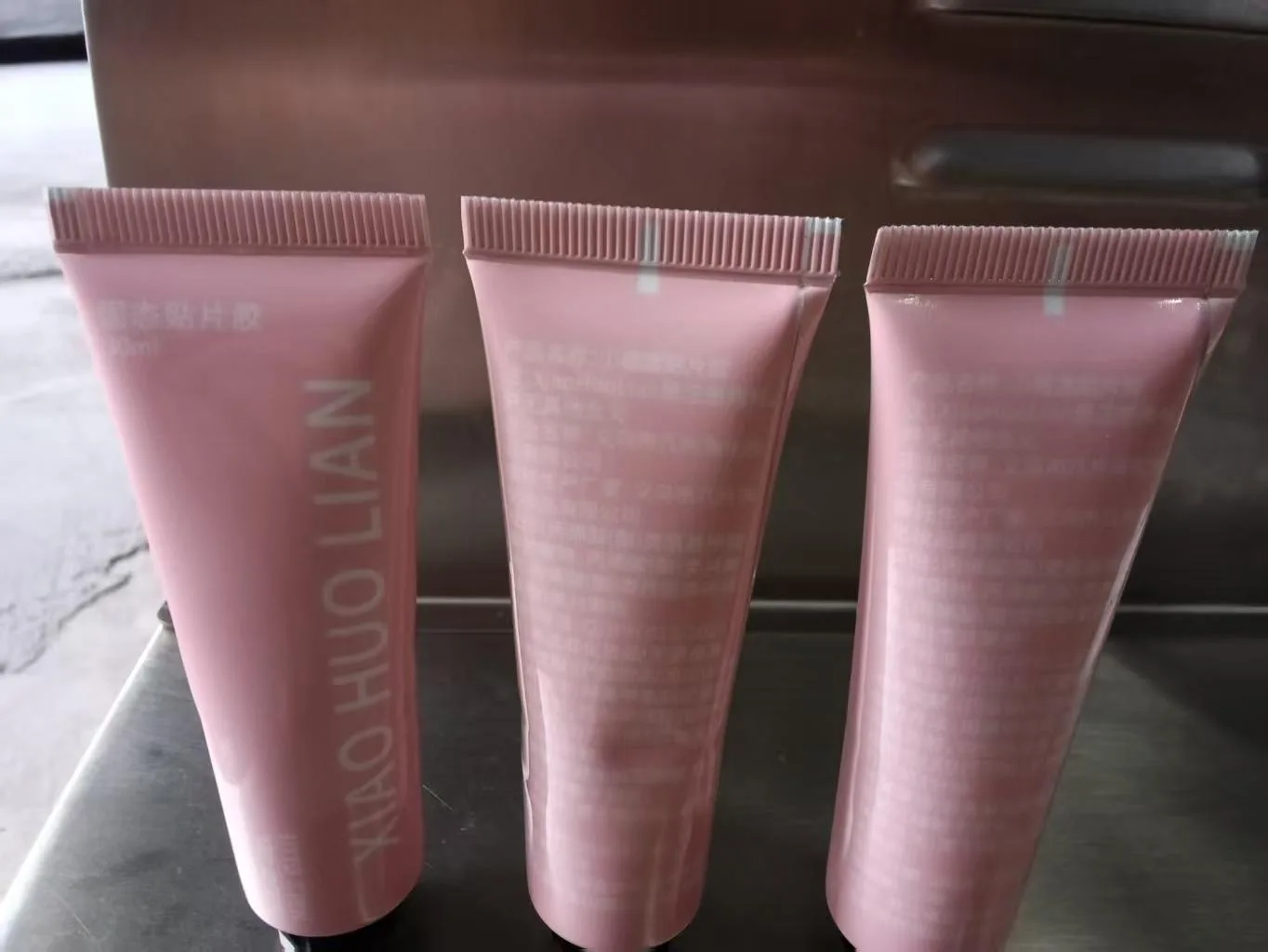
The tube you choose affects your packaging costs, your shelf appeal, and — critically — which filling and sealing machine you need. Laminated (aluminium-barrier) tubes and all-plastic tubes look similar on the outside but behave very differently on the filling line and on the shelf. This guide compares the two directly, so the decision is made before you sign a machine order rather than after.
It is a comparison, not a catalogue: for each difference you get the mechanism behind it, the test that reveals it, and what it costs you if you get it wrong.
What each tube actually is
- Laminated tube (ABL) — a multi-layer structure, typically with an aluminium foil barrier sandwiched between polyethylene layers. The aluminium layer blocks light and oxygen, giving the strongest barrier protection. The tube holds its shape when squeezed and stays flat as it empties.
- All-plastic tube — made entirely of plastic (usually PE, or co-extruded layers of PE/EVOH). It is softer and more flexible, bounces back after squeezing, and is fully recyclable where recycling streams accept mono-material tubes.
There is a third variant worth naming because it is often confused with the second: the plastic barrier tube, sometimes called PBL, which replaces the foil with a plastic barrier layer. It is a laminated tube in construction and an all-plastic tube in recyclability story — which is why buyers end up comparing the wrong pair. If recyclability is your driver, ask specifically whether the barrier is foil or plastic.
The key differences that matter
1. Barrier protection
Laminated tubes win on barrier. The aluminium foil blocks oxygen, light, and moisture far better than plastic alone, which is why they are the standard for toothpaste, pharmaceutical ointments, and products sensitive to oxidation. All-plastic tubes are fine for stable formulations — basic creams, gels, and cosmetics that do not degrade quickly.
The barrier question is really three questions, and they fail differently. Oxygen ingress oxidises an active or turns a cream yellow. Moisture loss dries the product at the shoulder and makes it hard to dispense at the end of the tube. Fragrance migration goes the other way — the scent leaves the product and is absorbed by the wall, so the tube smells right at the factory and wrong in the store. A foil layer addresses all three at once; a PE wall addresses none of them well, which is why a twelve-month claim on a PE tube needs evidence rather than assumption.
2. Look and shelf appeal
Laminated tubes offer crisp, high-resolution print and a premium metallic feel when printed on foil. All-plastic tubes have a softer, more traditional look. If shelf presence in a premium category matters, laminated often wins; if you are competing on cost and function, plastic is the leaner choice.
The mechanism is worth knowing because it explains why the print looks the way it does. Laminated tubes are printed flat, on the web, before the tube is formed — so the artwork wraps around the body in one pass with no seam registration to worry about. Plastic tubes are usually decorated after forming, by offset or screen printing on a curved surface, or by a label. Flat-web print holds fine detail and photographic gradients; curved-surface print is more limited. If your artwork depends on a fine gradient, that alone can settle the choice.
3. Cost and sustainability
All-plastic tubes are generally lower cost and, in mono-material form, easier to recycle. Laminated tubes cost more and are harder to recycle because of the mixed layers. If sustainability messaging is central to your brand, a mono-material plastic or EVOH-barrier tube may serve you better than classic aluminium lamination.
Unit price is not the whole cost. Laminated tube decoration is paid for on the print run, so a short run carries a higher per-tube print burden and usually a minimum order that is larger than a small brand expects. Plastic tubes bought as printed stock, or decorated by label, let you start at a lower volume. Neither is cheaper in the abstract — the comparison only means something at your annual volume, and it belongs in the same spreadsheet as the machine price.
Side by side
| Attribute | Laminated (ABL) | All-plastic (PE / PE-EVOH) |
|---|---|---|
| Barrier to oxygen and light | High — foil layer | Basic; improved with EVOH layer |
| Behaviour when squeezed | Holds the shape, stays flat | Bounces back to shape |
| Decoration | Print on flat web before forming | Print on formed tube, or label |
| Unit cost | Higher | Lower |
| Recyclability claim | Harder — mixed layers | Easier if mono-material |
| Sealing on the line | Weld (heat or ultrasonic) | Weld (heat or ultrasonic) |
| Typical use | Toothpaste, ointments, oxidation-sensitive actives | Creams, gels, lotions, everyday price points |
What this means for your filling machine
The good news: most modern tube filling and sealing machines handle both laminated and plastic tubes, because both are closed by welding. The differences are in settings, not hardware — sealing temperature, jaw pressure, and dwell time are adjusted for the tube’s material and thickness. What matters more for machine selection is whether you also need to run aluminium (metal) tubes, which require a folding mechanism instead of a heat seal. If your product line includes aluminium tubes, tell your supplier up front so the machine is specified correctly.
That said, “settings, not hardware” is true only up to a point, and the exception is worth knowing. Thin laminated film is less forgiving of a contaminated seal zone than a thicker PE wall, because there is less material to fuse through. On the same machine, the laminated recipe typically needs a tighter jaw pressure window and a cleaner jaw face. This is exactly the case where an ultrasonic sealing station earns its cost: it fuses through a slightly contaminated zone far more reliably than a heated jaw. Our ultrasonic vs heat sealing comparison covers that trade-off in detail.
Tube geometry matters too. Both formats run within the same machine envelope on our range — 15–50 mm diameter and 50–260 mm length — with change parts for each size. If you plan to switch format partway through the year, the change-part list and the changeover time are the numbers to get at quotation.
A quick decision guide
- Toothpaste, medicated ointments, oxidation-sensitive products → laminated tube for the barrier.
- Basic cosmetics, hand creams, gels → all-plastic tube for cost and recyclability.
- Premium / high-shelf-appeal products → laminated for print quality and feel.
- Strong sustainability brand → mono-material plastic or EVOH tube.
- Short runs and frequent artwork changes → plastic with label decoration, unless the flat-web print minimum works for you.
Four things to verify before you commit
- Which barrier, exactly. Ask whether the barrier layer is aluminium foil or plastic, and get it in the tube specification, not in a conversation.
- Whether the recyclability claim survives your market. “Recyclable” depends on local collection and on the cap and shoulder materials, not only on the body.
- What the decoration minimum is. Print minimums on laminated tubes can be larger than a launch quantity, which turns a cheap tube into expensive inventory.
- Whether both formats can run on the machine you are buying. Confirm the sealing station and the change parts cover both, and get the changeover time in writing.
FAQ
Can one machine seal both laminated and plastic tubes?
Yes, on a welding station — both materials are welded, so the station is shared and only the recipe changes. Aluminium tubes are the exception: they need a folding station, which is a different machine configuration.
Is laminated always better for premium products?
For print quality and barrier, usually yes. But premium positioning increasingly includes a recyclability story, and that can push a brand toward a plastic barrier tube instead. Decide which of the two premium signals your customer actually rewards.
Does the tube type change the filling accuracy?
No. Accuracy is set by the dosing system — ±1 g on a servo piston, ±1% on the HT220 at 20–50 tubes/min. The tube affects the seal, not the dose.
Can I switch tube types after buying the machine?
Between laminated and plastic, usually yes — it is a recipe and sometimes a change-part question. Switching to aluminium is not: that requires a folding station, and it is decided at order stage.
Related guides: Tube material guide · Aluminium tube folding · Ultrasonic vs heat sealing · GMP hygiene requirements · The complete guide
Not sure which tube fits your product?
Tell us your product and target price point — we’ll help you pick the tube and the right filling machine.