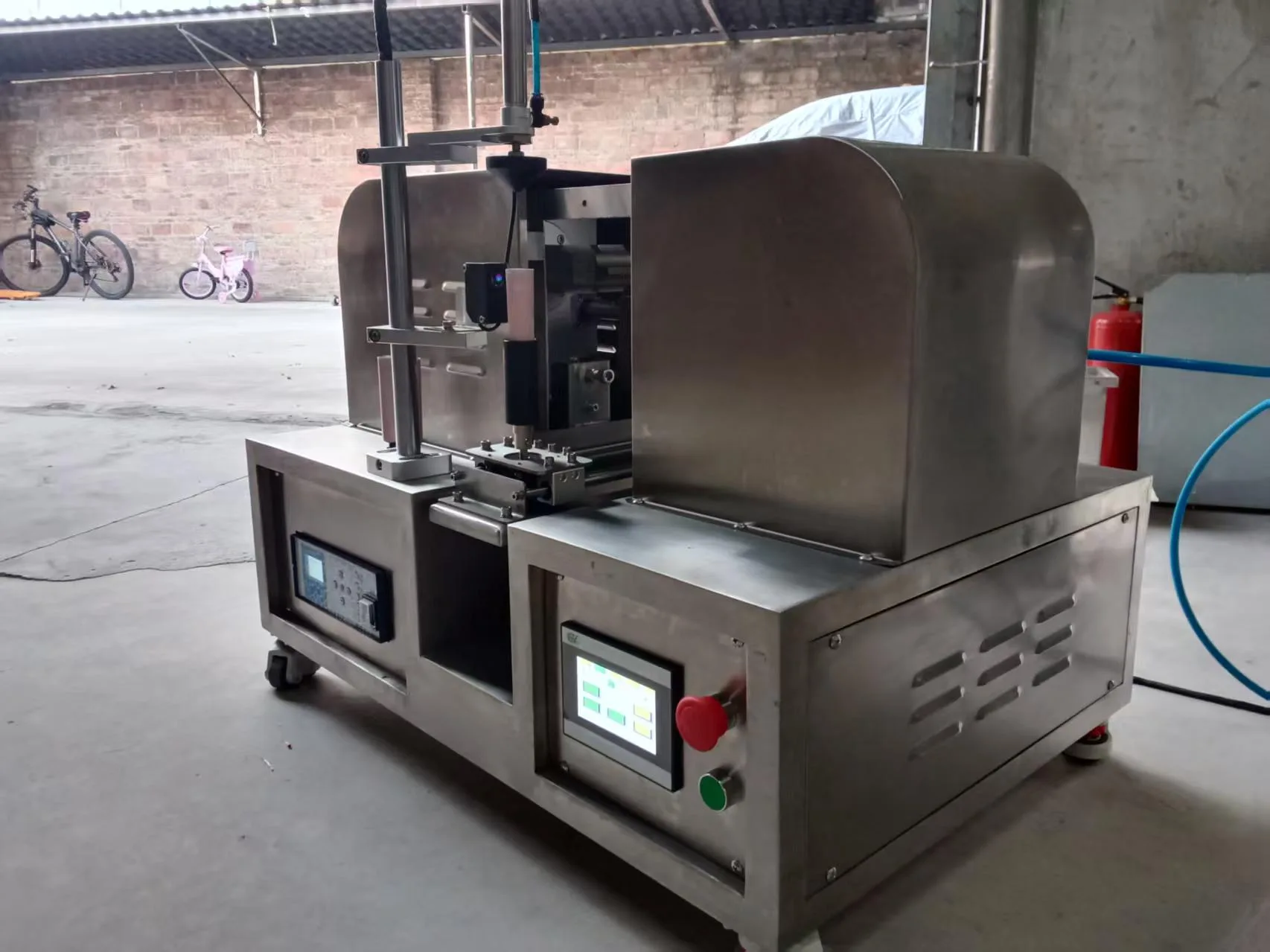
A tube filling and sealing machine is a made-to-order investment, so there is no single list price — the cost is set by a handful of concrete factors. Understanding them helps you compare quotes fairly and avoid over- or under-buying.
This page covers the six factors that move the price, what a factory quote normally includes and excludes, the line items that quietly appear after the purchase order, and the eight questions that make two quotes comparable.
Why there is no list price
Two machines that look similar on a web page can differ by a factor of several in price, because they differ in what happens to the tube between the hopper and the carton. A machine that loads tubes by hand and one that loads them with a robot are not the same product at different margins — they are different machines that happen to share a frame layout.
So the useful question is never “what does a tube filling machine cost”. It is “what does it cost to fill my tube, at my output, in my material, with my accuracy requirement”. The six factors below are the ones that answer it.
The factors that set the price
- Automation level — a semi-automatic single-station machine costs less than a fully automatic multi-station rotary line. The gap is mostly labour: a fully automatic machine loads tubes itself.
- Filling technology — servo piston filling is more precise (and costs more) than a pneumatic piston; a ceramic pump for single-dose fills is a further step up in precision and price.
- Sealing process — heat sealing, ultrasonic sealing and aluminium folding are three different stations with different costs.
- Number of stations — a 10- or 12-station rotary costs more than a single-station machine but delivers far higher output.
- Tooling and change parts — each tube diameter needs its own set of change parts and dies, so the more sizes you run, the more tooling you buy.
- Options — batch/date coding, additional filling heads, a vertical feed hopper, and stainless-steel construction all add to the total.
What each factor really buys
Automation is a labour equation, not a luxury. A semi-automatic machine needs an operator placing tubes for every cycle; a fully automatic rotary with robotic loading does not. The price gap is real, but so is the headcount gap — and the right answer depends on whether you run one shift or three, and on what an operator costs where you are.
Filling technology is a specification you should choose, not a tier you should climb. A servo piston gives ±1 g across the range and the HT220 reaches ±1% at 20–50 tubes/min; a ceramic pump gives ±0.05 g for 0.2–2.5 ml single-dose work. If your product is a hand cream at ±2 g tolerance, paying for ceramic precision buys nothing you can sell.
Sealing process is the factor most often decided for you by the tube. Plastic and laminated tubes weld, by heat or ultrasonic; aluminium tubes fold. You cannot buy a heat-sealing station and later decide to run aluminium — that is a different station, decided at order stage.
Stations and tooling are where a “cheap” quote usually hides. A single-station machine can be a perfectly good buy for a small range, but every additional tube diameter needs its own change parts and dies. If you plan four sizes, price the four sets now — they cost the same later, and knowing the number changes which machine you choose.
Options are worth auditing one by one. Batch coding is usually essential for a regulated product and optional for a sample run. A vertical feed hopper earns its place when tube loading is the bottleneck. Stainless construction is a hygiene requirement for medicated products and a preference for basic cosmetics — see the GMP hygiene requirements for where the line falls.
| Factor | Lower-cost end | Higher-cost end | What you gain |
|---|---|---|---|
| Automation | Semi-automatic | Fully automatic rotary | Fewer operators, steadier output |
| Dosing | Pneumatic piston | Servo piston / ceramic pump | ±1 g, ±1%, ±0.05 g |
| Sealing | Heat seal | Ultrasonic / folding station | Tolerance of thin film or metal tube |
| Stations | Single station | 10–12 station rotary | Output per hour |
| Tooling | One tube size | Four sizes with change parts | Format flexibility |
| Options | Base machine | Coding, extra heads, S/S | Compliance, throughput, hygiene |
What a typical quote covers
A factory quote from HTKC is itemised by machine, with the filler type, tooling, and optional feed hopper listed separately. It is quoted FOB Guangzhou — the machine price and export packing are included, while freight to your destination is on your account.
FOB is worth understanding properly, because it is where two quotes stop being comparable. Under FOB the seller delivers the goods on board the vessel at the named port; the buyer pays ocean freight, insurance and destination charges. A quote that looks lower may simply be quoting a different Incoterm. Ask which term is quoted before comparing any number.
Costs that appear after the purchase order
The machine price is the largest number on the sheet, not the whole budget. These items are normal, legitimate, and frequently missing from the first comparison:
- Freight, insurance and destination charges — outside the FOB price.
- Import duty and clearance — depends on your country and the machine’s HS classification.
- Installation and commissioning — sometimes included, often a separate service, and travel costs may be extra.
- Operator training — a day of training is cheap; a month of learning by trial is not.
- Spare and wear parts — the day-one stock list is a real line item, not a nice-to-have.
- Additional tooling for a second tube size, if you buy it later rather than now.
- Electrical standard — a machine built for the wrong voltage or plug standard needs a fix before it can run.
- Trial tubes and product for the factory acceptance test — small, but it has to be shipped.
Lead time and payment
Typical delivery is 25–30 days after the deposit is received (excluding public holidays). Payment is usually a 50% deposit on signing, with the balance due before shipment.
Plan the calendar backwards from the day you need tubes on a shelf, not from the day you want the machine. Add ocean transit, clearance and installation to the 25–30 days, then add a buffer for the first production week, which is always slower than the rated speed. Buyers who compress that buffer usually compress the acceptance test instead.
Total cost of ownership, in structure
Purchase price is one of six cost blocks. We are not going to quote figures for the other five, because they depend on your electricity price, your labour rate and your product — but the structure is the same for everyone:
- Machine — the quotation.
- Tooling — change parts for every size you actually run.
- Spares — consumed parts, priced per year rather than per order.
- Energy and air — modest per machine, but it runs for years.
- Downtime — the largest block, and the one a cheap machine usually increases.
- Changeover labour — hours per changeover multiplied by how often you change format.
Two machines can be identical in block one and differ by a wide margin in blocks two to six. That is why the cheapest quote is rarely the cheapest machine, and why the energy and maintenance cost page exists as a separate topic rather than a footnote.
How to compare quotes fairly
Ask every supplier for the same information: the filler type (servo piston, ceramic pump or pneumatic), the number of stations, the sealing process, which tooling is included, and what is not included (freight, installation, training). A lower price often means a pneumatic piston, fewer stations, or tooling sold separately.
Put the answers in one table with eight rows and the comparison stops being a conversation about price:
- Filler type and stated accuracy, with the test method.
- Station count and rated output, in tubes per minute.
- Sealing process, and whether a second process can be added later.
- Tooling included: which tube sizes, how many sets.
- Incoterm and named port.
- Lead time from deposit, and what the deposit percentage is.
- What is excluded: freight, duty, installation, training, spares.
- Spare-part lead time and whether a manual with an illustrated parts list is included.
Three patterns worth recognising
The price that excludes tooling. A machine quoted without change parts looks competitive until you price the second and third tube size. Ask for the tooling line explicitly, in the first quote.
The price that excludes the accuracy you need. A pneumatic piston at a wide tolerance can be half the cost of a servo system — and unusable if your product needs ±1 g. Match the dosing system to the tolerance your market requires, then compare.
The price that assumes one shift. Output figures are per hour at rated speed. If you need the annual volume of a three-shift operation, a machine that needs an operator per cycle may not reach it at all, however attractive its price.
FAQ
What is the starting price?
Our product pages start from US$1,000 FOB Guangzhou for the entry model. That is a starting point for the simplest configuration, not a price for a production line — the final figure depends on diameter, material, output and tooling.
Why can’t you give a price without my tube spec?
Because the tube decides the sealing station and the tooling, and those are two of the six price factors. Diameter, length, material and fill volume are the minimum needed to quote something you can actually use.
Is a semi-automatic machine cheaper overall?
Cheaper to buy, not necessarily cheaper to run. At low volume with cheap labour it often wins; at three shifts it usually loses on headcount and consistency. The crossover depends on your wage rate and your annual volume, not on the machine alone.
Can I add stations or automation later?
Options such as coding, an extra filling head or a feed hopper are usually addable. A different sealing process is not — welding and folding are different stations, and that choice is fixed at order. Decide the sealing process on the tube you will run in three years, not only today.
Does a higher price mean a better machine?
It means more of the six factors, which is not the same thing. Paying for accuracy you do not need or stations you cannot feed is as wrong as buying too little. The right comparison is against your specification, not against another machine’s price.
Related guides
- How to specify a tube sealing machine
- Semi-automatic vs fully automatic tube filling
- Machine output: picking the right speed for your volume
- Importing a tube filling machine from China
- The complete guide to tube filling & sealing machines
- Tube sealing machine market: buyer’s view
Ready for a factory-direct quote? Send your tube spec and destination country, and we will itemise the machine, filler and tooling so you can compare fairly.