Not every brand starts with a factory running thousands of tubes an hour. If you are launching a skincare, cosmetic, or specialty product — or running pilot batches before scaling — a full automatic line is overkill and a waste of capital. This guide explains how to fill tubes efficiently at small volume and what to buy when you are just starting out.
Why Small-Batch Filling Is Different
At small volume, your bottlenecks are flexibility and changeover, not raw speed. You are likely filling multiple products, multiple tube sizes, and short runs that change frequently. A machine that takes hours to clean and change between products will eat your margin faster than a slower, more flexible one.
The Right Machine for Pilot and Startup Volume
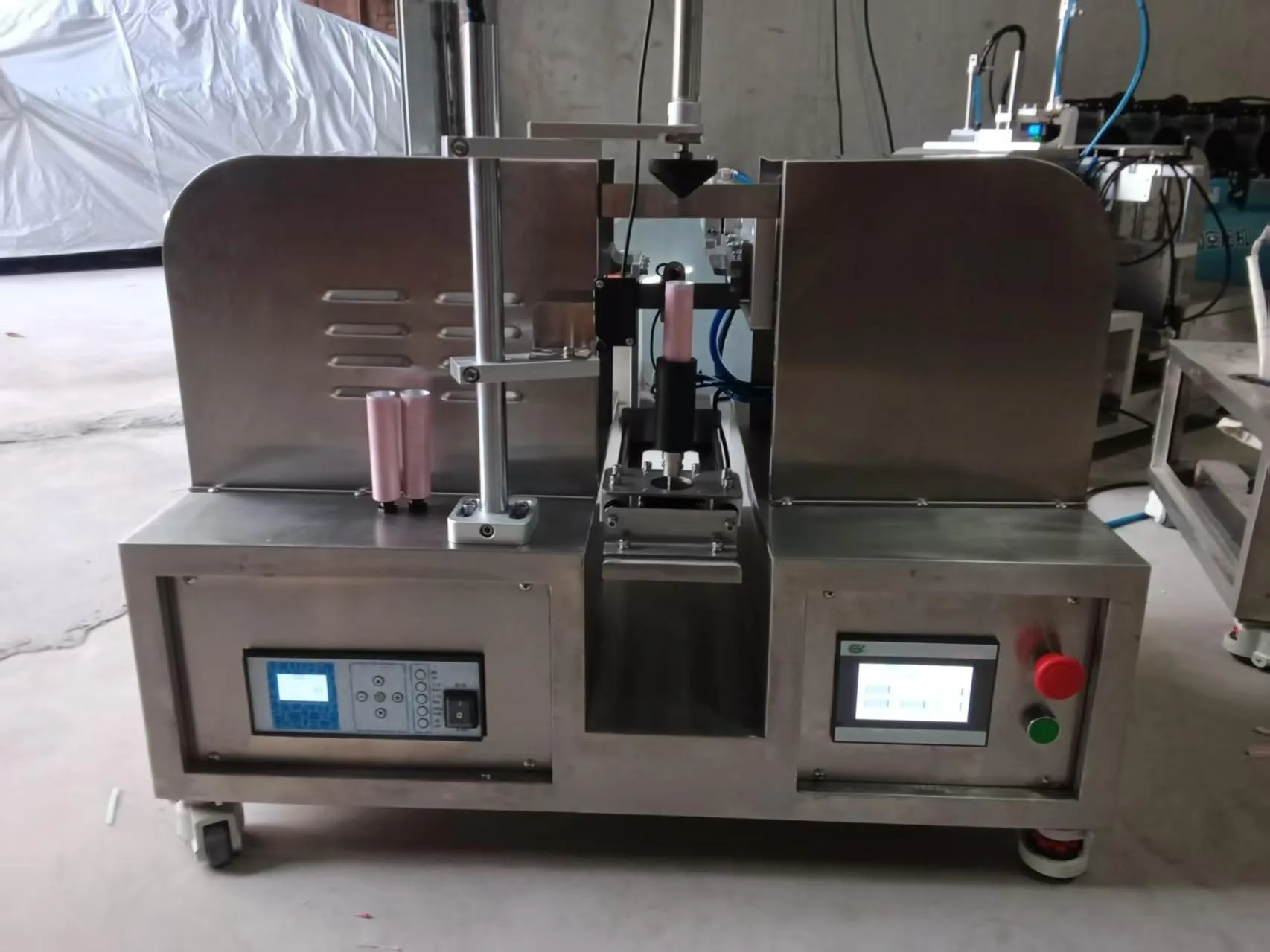
A semi-automatic tube filling and sealing machine is usually the right starting point. It handles filling, sealing (and folding for aluminium tubes), and gives you accurate dosing without the cost and footprint of a full automatic line. Output depends on the operator, but for pilot runs and small batches this is not a limitation — it is the right match. Semi-automatic machines also handle a wide range of tube sizes, so you can run different products on one machine as your line develops.
How to Fill Efficiently at Small Volume
- Batch similar products together — group runs by product type to minimize cleaning and changeover.
- Keep fill accuracy tight even at small volume — dosing drift wastes expensive specialty ingredients; a servo piston system around ±1g is plenty for most pilot runs.
- Document your process — recording temperature, dwell, and fill settings during pilot runs gives you the SOP you will need when you scale up.
- Plan for growth — choose a machine that lets you add automation later, rather than one you must replace entirely.
When to Move Up to Automatic
The tipping point is when labour and consistency become the constraint: when you need a single operator to run higher output, when you are running one or two tube sizes continuously, or when manual loading can no longer keep up with demand. That is the signal to step up to a fully automatic line — and by then you will know your exact tube sizes and volumes, so you can spec it precisely.
The economics of a 1,000-tube batch
At pilot volume the machine is not what costs you money — the hour is. A semi-automatic platform at 10 tubes a minute fills 1,000 tubes in under two hours of run time, but the same batch carries a full cleaning cycle, a changeover, a start-up waste window and a QC hold at the end. Budget five to six hours of floor time for that 1,000, and the cost per tube looks nothing like the cost per tube at 50,000.
This is not an argument for a bigger machine. It is an argument for measuring the right thing: at pilot stage your metric is cost per learning cycle, not cost per tube. What you are buying with a semi-automatic machine is the ability to run twenty small batches a month without a commissioning project each time.
Product you will lose, and never budget for
Every fill line has a priming volume: the product that fills the hopper outlet, the hose and the dosing chamber before the first tube is correct. On a small line that can be a kilogram or two. Add the flush used to clean between products, the tubes rejected while the weight settles after start-up, and the tube that is opened for a destructive test each batch.
For a 1,000-tube pilot run of an expensive formula, that overhead can be several percent of your batch — and on a 5,000-tube run it is negligible. Plan the batch size so the priming volume is a rounding error, or accept that the first batch is a cost of learning, not a cost of goods.
Contract filling: the option to price before you buy
If your first year is under roughly 50,000 tubes, a contract filler will usually beat owning a machine on total cost — they already have the line, the QC and the warehouse. The reason to buy anyway is control: your own machine lets you run a batch in a week instead of a slot in someone else’s schedule, and lets you change a formula without renegotiating a minimum order.
A useful test: ask a contract filler for a quote on your annual volume, then compare it with the five-year cost of a semi-automatic machine plus one operator. If the gap is small, buy the machine — you are paying for speed of iteration, which is what a startup actually needs.
The scale-up path that does not make you buy twice
The route most growing factories take is not semi-automatic then automatic. It is one semi-automatic machine, then a second identical one, with a single operator loading both in sequence. You get redundancy (one machine down does not stop production), capacity in affordable steps, and changeover stays short because each machine can hold a different product.
The break point is labour, not machine speed. Once you would need a second operator to keep the stations fed — commonly somewhere around ten thousand tubes a day — the arithmetic flips and a magazine-fed automatic line is the cheaper answer. That comparison, with the numbers written out, is in manual vs semi-automatic vs automatic tube filling.
Two things worth specifying on the first machine even though you do not need them yet: quick-release tooling, so a second product does not cost a day, and a control that stores recipes, so the parameter set for a batch can be recalled rather than retyped. Both are cheap at order stage and awkward to retrofit. The platform that covers pilot through to about ten thousand a day is the TY-001 semi-automatic ultrasonic tube sealer; what to send for a matched quote is on the contact page.
If you are weighing a machine against staying with a contract filler, the question “do I need a fully automatic line for 5,000 tubes a day” is answered directly in the buyer FAQ, and the arithmetic behind it is in the automation comparison.
Related guides: Semi vs fully automatic · Fill accuracy explained · Cost factors · The complete guide · Turnkey tube filling line from specification to shipment
Starting small? Get a machine sized to your real volume.
Tell us your product and expected batches — we’ll recommend a flexible starter machine, not the biggest one we sell.