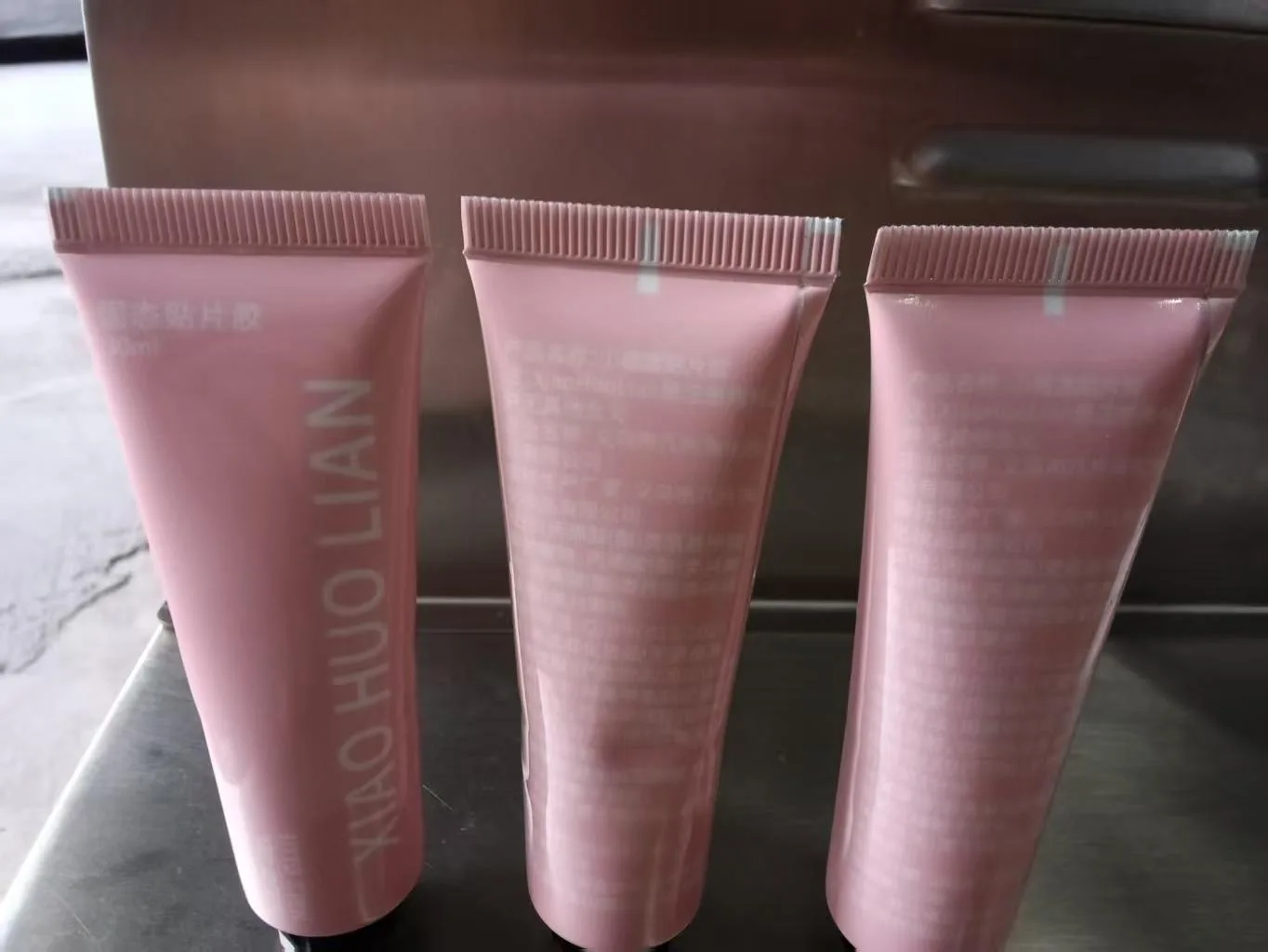
Before you buy a filling machine, decide what you are filling into. A tube, a bottle and a jar are filled by different equipment, and the packaging choice changes the machine — and its cost — far more than most buyers expect.
The key difference is how the package is closed
- Tubes — filled from the open tail, then the tail is welded (plastic/laminated) or folded (aluminium). Needs a dedicated tube filling and sealing machine.
- Bottles — filled from the neck, then capped with a screw or press-on cap. Needs a bottle filler + capper.
- Jars — filled from the wide mouth, then lidded. Needs a jar filler + lidder, usually with a wider fill nozzle.
Read that list again and notice what it is really saying: the container decides the closing step, and the closing step decides the machine. Everything else about the product — viscosity, fragrance, pH — only tunes the dosing system inside a machine family you have already chosen by picking the container.
The comparison in one table
| Criterion | Tube | Bottle | Jar |
|---|---|---|---|
| Typical product | Cream, gel, ointment, toothpaste | Lotion, toner, oil, serum | Balm, scrub, mask, bulk cream |
| Dose control | User squeezes an exact amount | Set by pump or orifice | User scoops as needed |
| Product contact with air | Low — closed until squeezed | Moderate, depends on pump | High — surface exposed at every use |
| Machines needed | One integrated fill-and-seal station | Filler plus capper | Filler plus lidder, wide nozzle |
| Line length | Shortest | Longer | Longer, plus lid handling |
| Portability | Best — light, unbreakable | Glass is heavy and breakable | Bulkiest |
When a tube is the better choice
- Precise dose control — a tube lets the user squeeze an exact amount, important for ointments and toothpastes.
- Hygiene and product protection — the product is not exposed to air or fingers between uses.
- Portability and travel size — tubes are light and unbreakable, ideal for sample and travel sizes.
- Cost per unit — for creams and gels, a tube is often cheaper than a comparable bottle and pump.
There is a fifth reason that rarely appears in comparisons but shows up in the factory: a tube is filled and closed in one pass. You do not accumulate open, filled containers waiting for a capper, and you do not need to protect them in between. For a small operation with one shift and limited floor space, that simplification is worth more than a marginal difference in unit cost.
When a bottle or jar wins
- Liquid products that pour — lotions, toners, oils — often suit a bottle with a pump or flip-top.
- Repeated, large-volume use — a jar lets the user scoop as much as they need.
- Premium glass presentation — where the package itself is part of the brand.
A tube is also a poor fit for very low-viscosity products: a watery toner will run out of the tail during filling, and the seal will not tolerate product in the weld zone. If your product pours rather than holds its shape, the container decision has already been made for you.
What this means for your machine budget
A tube filling and sealing machine is a single, integrated station — fill, seal and trim in one. A bottle or jar line usually needs a separate filler and a capper/lidder, so the line is longer and can cost more in total for the same output. If your product is a cream, gel or ointment, a tube line is often the leaner, more cost-effective route.
The budget mistake is comparing one machine against one machine. Compare lines: filler plus capper plus the conveyor between them, versus one tube station. The cost structure of each route is set out in what drives tube filling machine cost.
The questions the container decides before you choose a machine
| Question | Why it matters |
|---|---|
| Does the product hold its shape? | A tube needs a product that stays where it is put; a pourable liquid needs a bottle |
| How many formats will you run? | Every tube diameter and length needs its own tooling set |
| How much floor space do you have? | A tube station is one footprint; a bottle line is several |
| Will you fill in-house or outsourced? | Contract fillers often price by format, not by machine |
| What is the target output per day? | Sets the automation level, and whether you need a rotary at all |
Frequently asked questions
Can one machine fill tubes and bottles?
Not properly. The filling principle can be similar, but closing is completely different — a tube is sealed at the tail, a bottle is capped at the neck. Trying to serve both usually means doing neither well.
Is a tube cheaper than a bottle per unit?
For creams and gels it often is, because a tube needs no separate cap, pump or liner. But compare total cost including filling labour and the tooling you need per format.
What if I want to launch in a tube and add a bottle later?
That is a normal path. Start with a semi-automatic tube machine that lets you scale into a full line, and add the bottle filler as a separate station when the volume justifies it.
Does the container affect filling accuracy?
Yes. A tube’s tail opening and a jar’s wide mouth present product differently to the nozzle, so the dosing system and nozzle geometry differ. See what ±1 g and ±1% actually mean for how that plays out on a tube line.
Which container suits a very small pilot batch?
Usually a tube, because one station covers fill and close. The trade-offs at low volume are set out in small-batch tube filling for startups.
Still deciding?
Tell us your product type, viscosity and target output. We will recommend the tube machine — or tell you honestly if a bottle or jar line would serve you better.
Related guides
- Plastic, laminated or aluminium tube — choosing the material
- Machine output: picking the right speed for your volume
- The complete guide to tube filling & sealing machines
- Filling creams and ointments: five keys to a clean fill
- What drives the cost of a tube filling machine
- Complete tube filling and sealing line — turnkey
Tell us your product type and target output, and we will recommend the right filling line for your packaging — tube, bottle or jar.