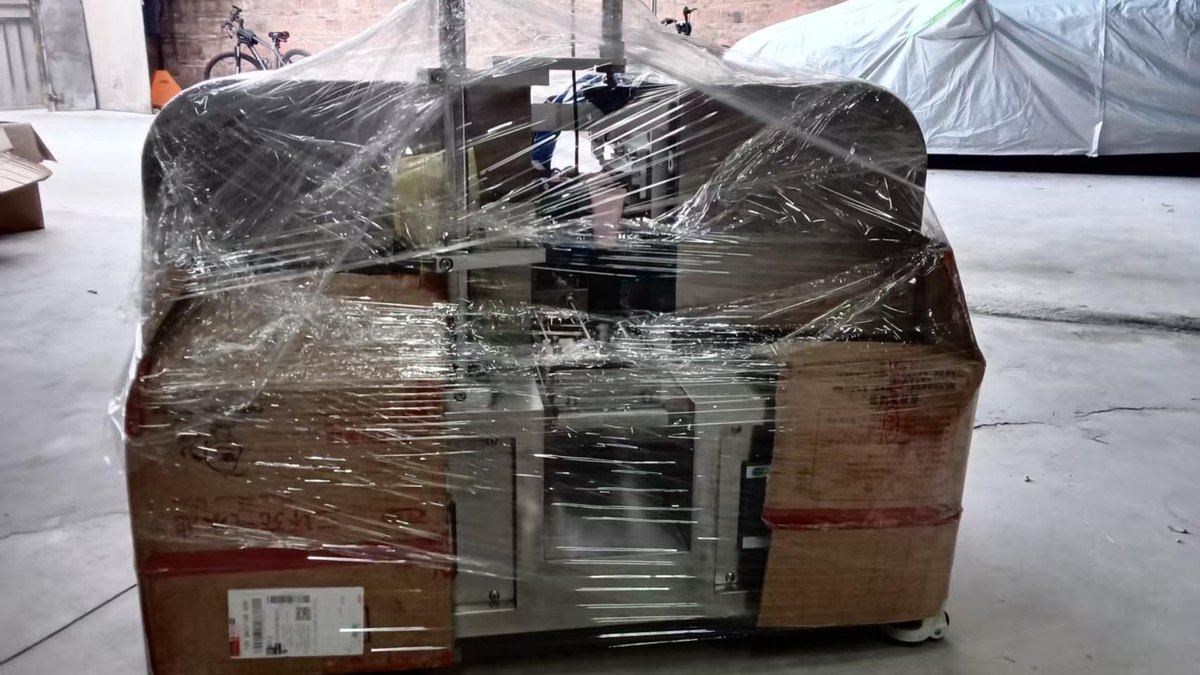
Buying a tube filling and sealing machine directly from a Chinese manufacturer is one of the most cost-effective ways to equip a cosmetics or pharmaceutical line — but only if you understand the import process up front. Buyers in the Middle East, Latin America, and Central Asia in particular ask us the same set of questions: how does shipping work, what are the Incoterms, and what hidden costs should I expect. This guide walks through the full journey from order to delivery, based on how HTKC actually ships.
Step 1: Confirm Specifications Before You Pay
The single most common import mistake is ordering before the machine spec matches your product. Before committing, confirm in writing: tube material and diameter range, filling volume range and accuracy, output speed for your tube size, and voltage / frequency for your country’s power supply. A mismatch on voltage alone can delay a line by weeks. A good supplier will ask about your product and tube first — not just send a price.
Step 2: Understand the Incoterm
Most Chinese machine exporters quote FOB (Free On Board) at a Chinese port such as Guangzhou. FOB means the supplier is responsible for the machine up to the point it is loaded onto the vessel; you (or your freight forwarder) handle the ocean freight, insurance, and destination costs. Alternatively, some buyers prefer CIF (Cost, Insurance and Freight), where the supplier arranges shipping and insurance to your destination port. Know which one you are being quoted before you compare prices, because FOB and CIF are not directly comparable numbers.
Step 3: Production Lead Time
A standard semi-automatic or automatic tube filling machine is normally produced and made ready for shipment within roughly 25 to 30 days after order confirmation and deposit, depending on configuration and current production schedule. Custom options — special nozzles, dual-dosing systems, or changes for unusual tube sizes — add lead time. Confirm the lead time in writing and build it into your launch plan.
Step 4: Payment Terms
A common and fair structure for first-time buyers is a deposit to start production (often around 50%) with the balance due before shipment, settled by bank transfer (T/T). For established relationships, other terms can be discussed. Avoid suppliers who demand full payment with no verifiable company, no proforma invoice, and no production updates.
Step 5: Customs, Duty and the Hidden Costs
Beyond the machine price, budget for: ocean or air freight, marine insurance, import duty and taxes in your country (check your HS code for packaging machinery), port handling and clearance fees, and inland trucking to your factory. These can add a meaningful percentage on top of the FOB price, so ask your forwarder for a landed-cost estimate before you finalize the order.
Step 6: Installation and Support
Confirm what support is included after delivery: an operation manual and video, remote commissioning guidance, and how spare parts are supplied. A machine you can get running quickly — with clear documentation and a responsive supplier — is worth more than a slightly cheaper one that arrives with no support. Ask whether the supplier provides English documentation and remote setup assistance.
A Short Checklist Before You Import
- Tube material, diameter, and fill volume confirmed in writing
- Voltage and frequency matched to your country
- Incoterm clearly stated (FOB vs CIF)
- Production lead time and payment terms agreed
- Landed-cost estimate from your forwarder
- Post-delivery support and spare parts confirmed
The document set has to be right before the machine ships
A machine stuck at destination because a certificate is wrong costs more than the certificate. The set that has to match, line by line, is: commercial invoice, packing list, bill of lading, and a certificate of origin. Everything on them — description, quantity, gross and net weight, HS code — should be identical, because a mismatch is what triggers a customs query.
Filling, closing and sealing machinery normally classifies under HS heading 8422, but the national subheading and the duty rate are set by the importing country, not by the exporter. Ask your forwarder to confirm the code your broker will use, and get it in writing before the invoice is issued. If your country has a trade agreement with China, the preferential certificate — Form E under the ASEAN arrangement is the common example — has to be applied for at shipment, not afterwards.
Two documents buyers forget: a CE declaration of conformity if the machine is going into the EU or UK, and the ISPM 15 mark on any solid-wood packing. Untreated wood is refused or fumigated at your cost, and the fumigation happens after the machine has already travelled.
Voltage and frequency: settle it before the frame is welded
The factory standard in China is 380 V three-phase at 50 Hz. Plenty of destinations do not match it: parts of Latin America run 220 V three-phase at 60 Hz, the Gulf usually sits at 380–400 V 50 Hz, and some sites have 440 V or 415 V. On a 60 Hz supply a 50 Hz motor runs about 20% faster, which changes output and can overload a pump that was sized for the slower speed.
Three ways to handle it, in order of cost: order the machine wound for your supply (best, and free if you say so at order stage); fit a variable frequency drive so the motor speed is set electronically; or add a transformer, which fixes voltage but not frequency. The last one is the most common mistake — it solves the number on the nameplate and leaves the cycle time wrong.
Send a photograph of your workshop’s distribution board with the order. It takes ten seconds and removes the single most common commissioning failure.
Pre-shipment inspection: what to ask them to show you
A video of a machine running is not evidence that your machine runs your tube. Ask for four specific things, and refuse the general one:
- A run on your tube — same diameter, same length, same material — with the sealed tail shown close up.
- The parameter sheet from that run: temperature, weld time, pressure, cycle. It ships in the crate; if it does not exist, the run was not controlled.
- A nameplate photograph showing the serial number, voltage and frequency actually built.
- A weighing sequence — ten consecutive tubes on a scale, filmed without a cut — if fill accuracy is part of your specification.
For larger orders, a third-party pre-shipment inspection is cheap insurance. Brief the inspector on the specification, not on the machine — an inspector who only counts crates adds nothing.
The landed-cost sheet, and why FOB is the wrong number to compare
Two quotes at the same FOB price can land 20% apart. The lines that differ are freight (a tube sealer is bulky for its value), insurance, duty, clearance and brokerage, inland haulage to your plant, and commissioning — either a technician’s flights and hotel or the days your own team spends learning the machine.
Build the sheet once and reuse it for every quote. When the numbers are side by side, the Incoterm question answers itself: FOB gives you control of freight and is usually cheaper overall, CIF is simpler, and DDP is only worth it when the seller genuinely knows your customs regime. What each term puts on your side of the ledger is set out in the buyer FAQ; for the machine itself, the four platforms show what you are actually shipping. Terms used across the trade — FOB, CIF, DDP, B/L, CO — are defined in the glossary.
Related guides: Tube filling machine cost factors · How to specify a machine · Export markets we serve · The complete guide
Ready to import from a factory you can reach?
Send us your tube spec and destination port — we’ll quote FOB and confirm lead time.