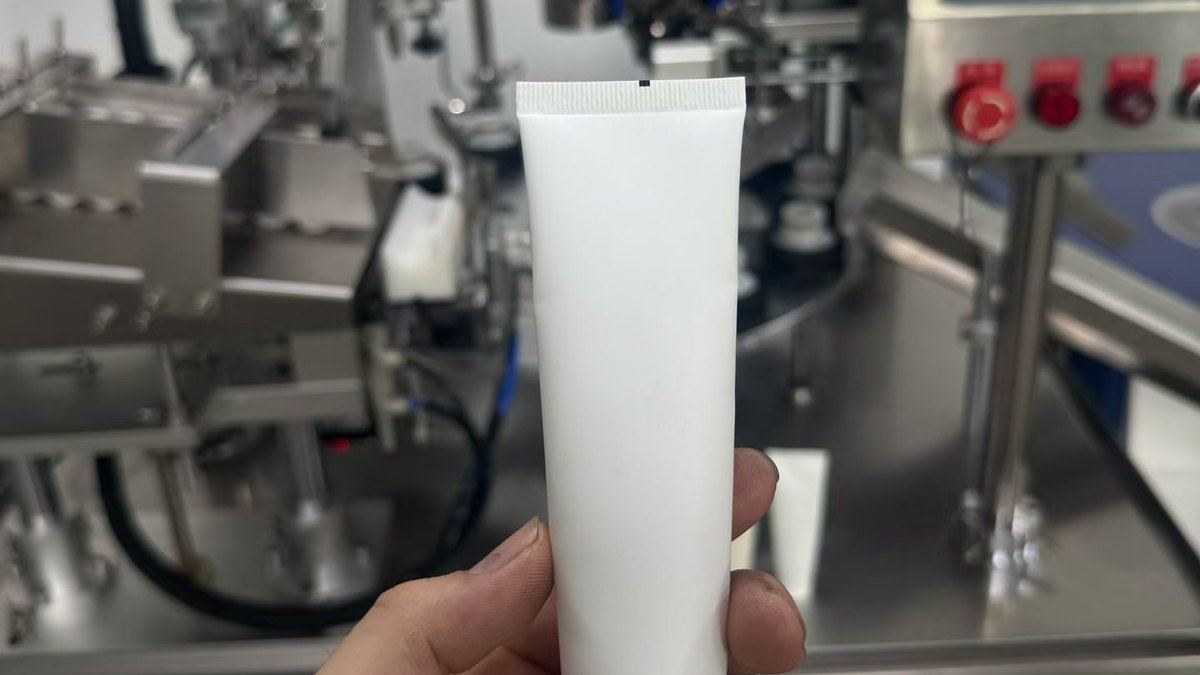
An aluminium tube folding machine closes the open tail of a metal or laminated tube by heating the tail, folding it over two or three times and crimping the fold flat under pressure. The same station is also sold as a tube crimping machine, a collapsible tube crimping machine, a tail closing machine, or in Chinese a 铝管折尾机 — the operation is identical, only the name changes.
Why one machine has four names
Search for this equipment and you will find it sold as a tube folding machine, a tube crimping machine, an aluminium tube sealing machine and a tail closing machine. They all describe the same station on a tube filling line. The confusion comes from the fact that “sealing” covers two very different physical processes, and only one of them is actually folding.
To a buyer, what matters is not the word on the nameplate but which process your tube requires — because a machine that folds cannot weld, and a machine that welds cannot fold. Get that wrong and the tube either leaks or the print gets scorched.
What the folding process actually does
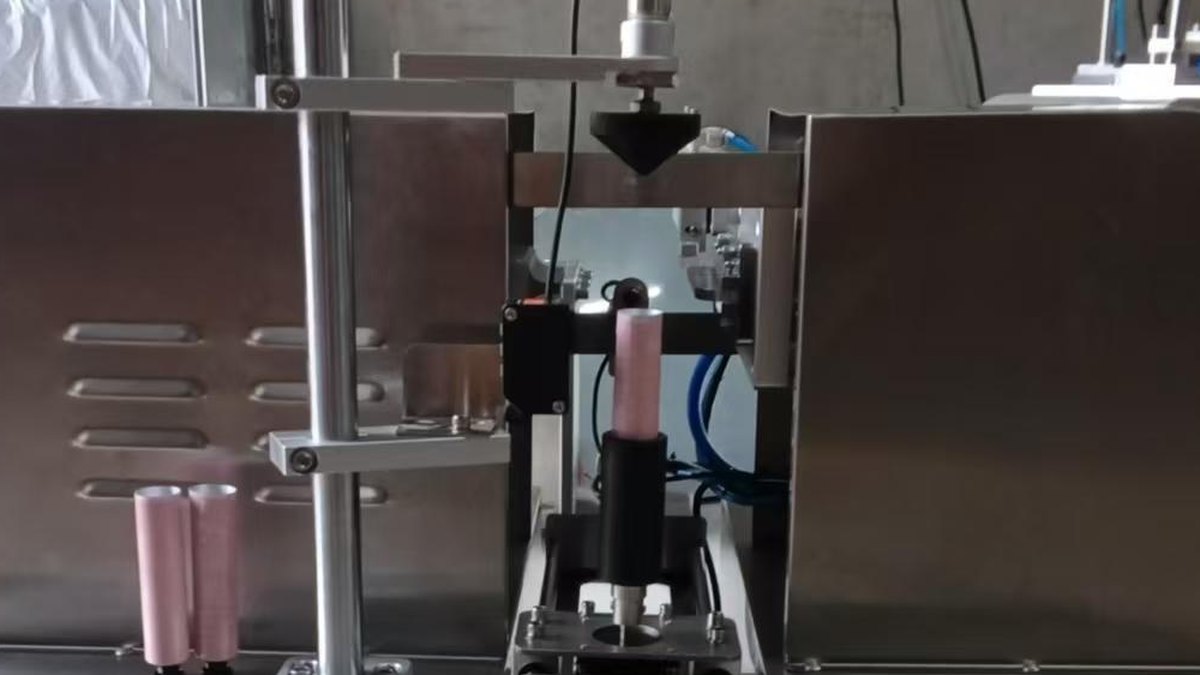
A folding machine works on tubes where the tail is coated with a heat-sealable lacquer. The sequence is:
- The tube is indexed into the station and the print registration mark is read, so the fold lands square to the artwork.
- The tail is heated — the lacquer softens but the metal does not melt.
- A folding blade turns the tail over, typically in two or three passes, each one narrower than the last.
- The folded edge is crimped flat with a toothed or smooth jaw, which welds the lacquer layers together and leaves the characteristic ribbed tail you see on a metal toothpaste or pharmaceutical tube.
The result is a mechanical seal backed by a heat-activated adhesive layer. It is strong, it is cheap per tube, and it is the only method that works on a genuinely metallic tube body, because there is nothing thermoplastic in the wall for an ultrasonic welder to fuse.
If the tube wall contains a thermoplastic layer — polyethylene, polypropylene, or a plastic barrier laminate — it can be closed by ultrasonic welding. If the wall is metal with only a lacquer coating, it has to be folded. Most buyers do not know which tube they have until they send a sample.
Folding versus ultrasonic sealing
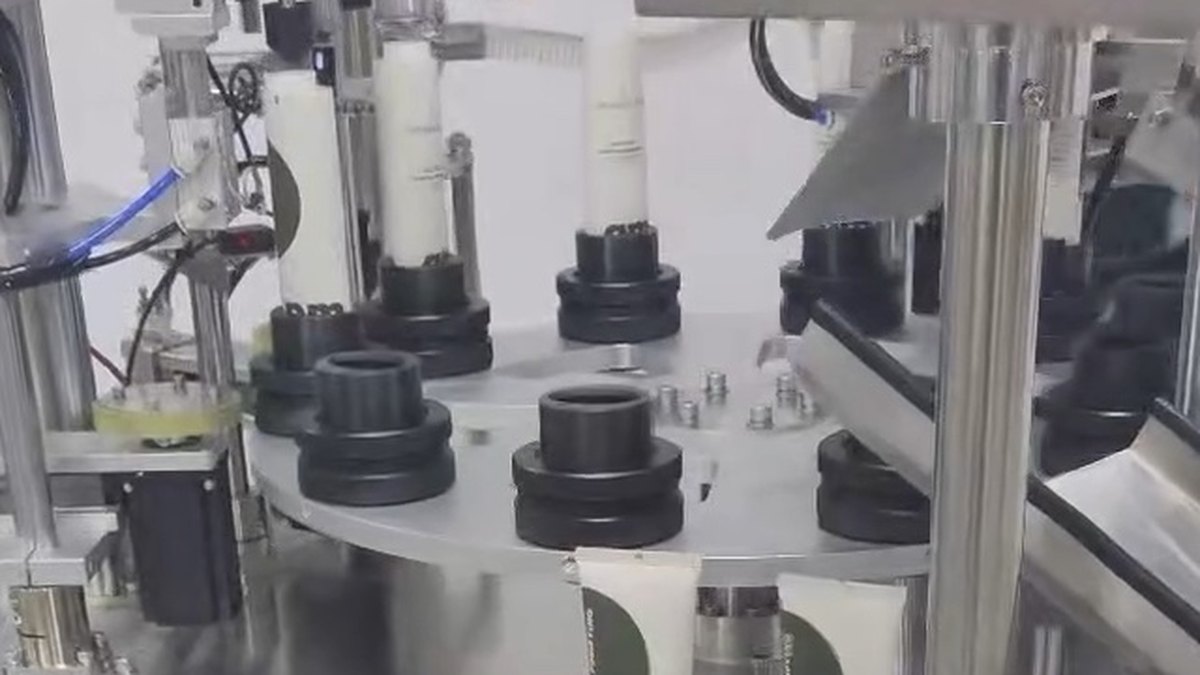
These are the two ways a modern line closes a tube tail. Neither is better; they serve different tube constructions.
Both methods need colour-mark registration. Neither tolerates a tube loaded the wrong way round.
Which tubes can be folded
- Pure aluminium tubes. The classic toothpaste and ointment tube. Folding is the only option — there is no plastic in the wall to weld.
- Aluminium barrier laminate (ABL). A metal foil core with plastic inner and outer layers. Can be folded or ultrasonically welded, depending on the lacquer specification. Ask your tube supplier which they recommend.
- Plastic barrier laminate (PBL). All-plastic, usually welded rather than folded.
- Extruded plastic tubes (PE, PP). Welded. Folding a plastic tube gives a weak, springy tail that will not hold.
When a folding machine is the right purchase
A folding station tends to be the right answer in four situations:
- Your tube supplier ships pure aluminium tubes, which is still the norm for pharmaceutical ointments and many oral-care products.
- You are running small batches where the per-tube cost of a specialist tube construction is not justified.
- You want a simple, mechanical station with no frequency tuning and no ultrasonic generator to maintain.
- Your artwork runs close to the tail and you cannot risk any heat-affected zone on the print.
What to check before you buy
Six things decide whether a folding machine will actually run your tube, and they are all things a supplier should confirm in writing rather than by eye:
- Tail lacquer specification. Not all aluminium tubes carry a fold-grade lacquer. A tube made for welding may have no foldable coating at all.
- Tube diameter and length range. The tooling is diameter-specific; a machine that covers 15–50 mm needs a different jaw set at each end of that range.
- Fold depth and rib pattern. Some markets expect a specific ribbed pattern on the tail. Ask for a sample of the finished fold, not a photo.
- Registration tolerance. If the fold must line up with the print within a millimetre, the machine needs a colour-mark sensor, not a mechanical stop.
- Output versus loading. A semi-automatic folder is paced by the operator, not the machine. Published figures are usually a range for that reason.
- Utilities. Air pressure and electrical supply are rarely a problem, but confirm the voltage before the machine is built, not after it lands.
The fastest way to settle all six at once is to post a small batch of your own tubes to the supplier and ask for video of the finished fold with the parameters used. Any manufacturer who cannot do that is guessing.
Questions buyers ask before ordering
Is a tube folding machine the same as a tube sealing machine?
Can one machine do both folding and ultrasonic sealing?
What output should I expect?
Does the fold affect shelf life?
Related reading
Fold depth, tail length and the causes of a cracked crimp each have a worked answer in the buyer FAQ — those two questions come up on nearly every aluminium order.
Related guides
- Plastic, laminated or aluminium tube — choosing the material
- Ultrasonic vs heat sealing — which process your tube needs
- The complete guide to tube filling & sealing machines
Send us a tube — we will tell you which process it needs
Send the tube drawing or a physical sample and we will run it, then tell you which model, which tooling and what it will cost — before you commit to anything.