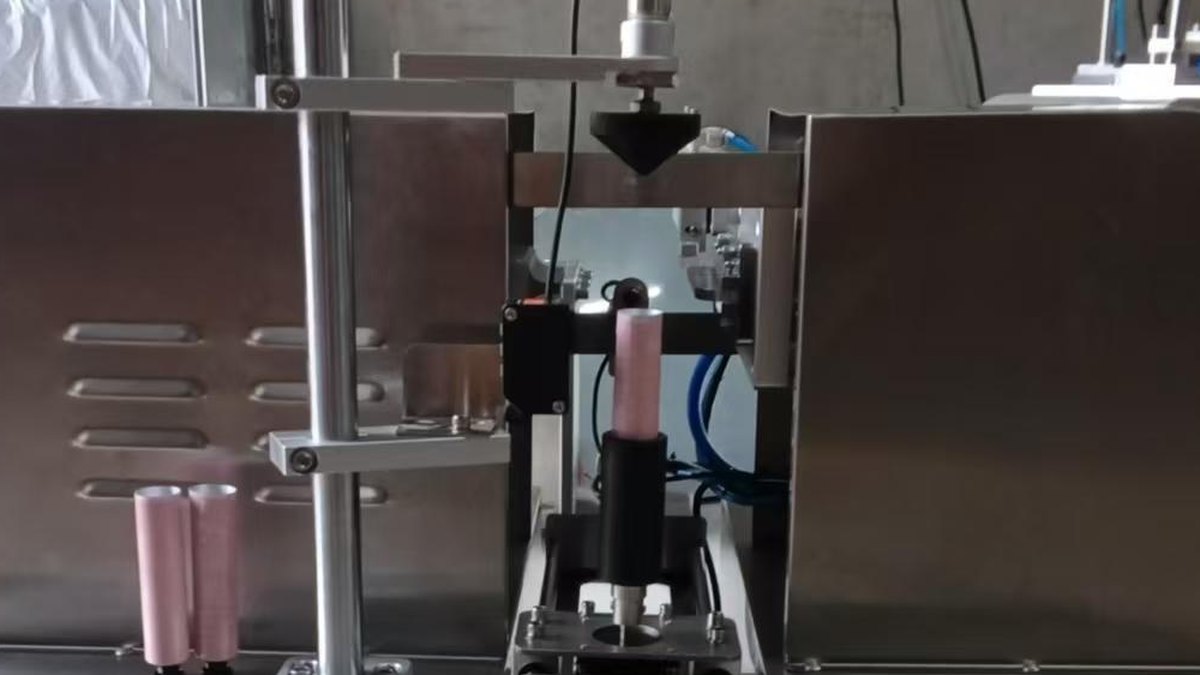
Every tube filling and sealing machine runs on a handful of consumable parts that wear out with normal use. Knowing what these parts are — and keeping a small stock of the critical ones — is the difference between a five-minute changeover and a line stopped for days waiting on a courier. This guide lists the common wear parts, how to tell when each one is going, and what to keep on hand.
It is written for the buyer as much as for the maintenance engineer, because spare-part availability is a purchasing decision. A machine whose wear parts are standard and stocked locally costs less over five years than a cheaper machine whose parts come from one factory on the other side of the world.
The wear parts that need periodic replacement
1. Sealing jaws and heating elements
For heat-sealed tubes (plastic and laminated), the sealing jaws or heating elements are the highest-wear components. The jaw face that presses against the tube gradually wears and can develop uneven contact, which shows up as weak or one-sided seals. For ultrasonic machines, the sonotrode (the vibrating horn) is the equivalent wear part. Keep a spare set, and inspect jaw faces regularly for wear or product buildup.
The failure signature is worth learning, because it does not look like a part problem at first. It looks like a product problem: seals that pass on one side of the tube and peel on the other, or a seam that holds on a slow run and fails when you speed up. Before you blame the tube supplier, look at the jaw face under a light — an uneven polish, a burr, or a baked-on film of product in the serration will produce exactly that pattern.
2. Dosing seals and O-rings
The dosing system — whether a servo piston or ceramic pump — relies on seals and O-rings that wear and eventually leak or lose accuracy. These are inexpensive but critical: a worn O-ring causes fill-volume drift and product dripping. Keep a set for each dosing configuration you run, and replace on a schedule rather than waiting for a leak.
This is the part most often left too long, because the symptom is gradual. Fill weights drift by a few tenths of a gram, QC flags it as a process problem, somebody adjusts the dose setting, and the real cause stays in the machine. If your fill weights have been re-adjusted twice in a quarter with no change of product, suspect the seals before you suspect the pump.
3. Anti-drip nozzle components
The anti-drip nozzle tip and its internal shut-off components contact product constantly and are subject to wear and residue buildup. A worn nozzle tip can cause dripping, uneven fill, or cross-batch contamination. These are small, cheap parts worth keeping on hand.
On a high-speed line the first sign is usually a drip mark on the tube shoulder just below the seal — cosmetic, but a reject. On a slower line it shows as a slowly growing weight variation between the first and last tube of a run. Either way, a nozzle tip is not something to order when it fails; it is something to have in a drawer.
4. Pneumatic components (fittings, filters, regulators)
For pneumatic machines, the compressed-air components — fittings, filter elements, and regulators — are the parts most exposed to wear from dirty or wet air. A clogged filter or a leaking fitting reduces pressure and degrades seal quality. Keep filter elements and a few common fittings in stock, and maintain clean, dry air supply.
Air quality is the upstream cause of most pneumatic wear, and it is cheaper to fix than to keep replacing parts. A machine running at 0.5–0.6 MPa needs that pressure at the machine, not at the receiver; a filter that has not been drained, or a line sized too small for the consumption, will show up as weak sealing force long before any component fails outright. Check the drain on the filter regulator weekly and write down what you find — a change in water carry-over is an early warning of compressor trouble.
How to tell a part is going, before it stops you
| Part | Early signal | If ignored |
|---|---|---|
| Sealing jaw / sonotrode | One-sided seal, seam fails at higher speed | Leakers reach the customer |
| Dosing seals / O-rings | Fill weight drift that needs repeated re-adjustment | Drips, rejects, quiet under-filling |
| Anti-drip nozzle tip | Drip mark on the shoulder, weight spread across a run | Cosmetic rejects, batch contamination risk |
| Air filter element | Water in the bowl, falling pressure at the machine | Weak seals, valve sticking |
| Heating element | Longer warm-up, uneven seam temperature | Seam strength varies through the shift |
What to stock from day one
- Spare sealing jaws (or sonotrode) — 1 set
- Dosing O-rings and seals — 1 set per configuration
- Anti-drip nozzle tips — 1 set
- Pneumatic filter elements and common fittings
- A few spare heating elements (for heat-seal machines)
The logic behind that list is simple: it covers the parts that stop the line and cannot be improvised. Everything else on the machine can usually wait for a shipment. These five cannot, because each one either stops production outright or silently degrades the product until someone notices.
If you run more than one tube size or more than one dosing configuration, multiply the seal sets — a set that fits the 35 mm tooling does not fit the 50 mm tooling, and discovering that at changeover time is the same as having no spare at all.
Standard part or proprietary part
This is the question that decides your five-year cost of ownership, and it is rarely asked. Pneumatic fittings, filter elements, O-rings in standard sizes and heating elements are usually catalogue items — you can buy them from a local industrial supplier. Jaws, sonotrodes, nozzle tips and dosing seals are usually made for the machine, and only the original manufacturer can supply them.
Neither situation is wrong. What matters is that you know which is which before you buy, and that the supplier commits to a lead time in writing. A proprietary jaw with a three-day air-freight commitment is fine; the same jaw with a six-week sea-freight default is a production risk you are accepting without being told.
Five questions to ask before you buy
- Are the wear parts standard or proprietary? Ask for the list, part by part, not a general answer.
- Does the supplier keep spares in stock? In stock means on the shelf today, not available to order.
- How quickly can they ship to your country? Ask for the courier transit time separately from the handling time.
- Is there a spare-parts list in the manual? A manual without an illustrated parts list turns every repair into an email exchange.
- What is the change-part cost for a second tube size? If you plan to run two sizes, that number belongs in the original comparison, not in next year’s budget.
Three habits that prevent the bad week
Log every change. A one-line entry — date, part, reason, who did it — turns a vague “the seals go quickly” into a real replacement interval after six months. Without the log you are guessing, and guessing usually means replacing too late.
Keep the old part until the new one runs. The most common self-inflicted downtime is throwing away a marginal part and finding the replacement is the wrong revision. Store the removed part in a bag with the date on it for one shift.
Fix the air before you fix the parts. If pneumatic components keep failing, the problem is upstream. Clean, dry air at stable pressure extends the life of every pneumatic part on the machine at once, and it is a cheaper fix than a shelf of spares.
FAQ
How often should wear parts be replaced?
It depends on product, tube material and running hours, so any fixed number quoted without those three inputs is a guess. The practical answer is to replace on condition plus a fixed review interval — inspect at every scheduled service and replace when the early signals in the table above appear.
Can I buy wear parts locally?
Standard pneumatic fittings, filter elements, catalogue O-rings and heating elements, usually yes. Jaws, sonotrodes, nozzle tips and dosing seals, usually not — they are made for the machine. Confirm which is which before you rely on local supply.
Does a cheaper machine mean more spare parts?
Not necessarily more parts, but often less available ones. The risk is not the part count, it is whether the parts are catalogue items and whether anyone stocks them near you.
What if the machine is already installed and I have no spares?
Order the five items on the day-one list now, and ask for a manual with an illustrated parts list if you do not have one. Then start the log — you cannot build a replacement interval retrospectively, but you can start one this month.
Related guides: Energy & maintenance cost · Troubleshooting · Maintenance checklist · Importing from China · The complete guide
Need spares or a machine that’s easy to keep running?
Tell us your machine or model — we’ll confirm spare-part availability and lead time to your country.