From US$1,000 · FOB Guangzhou
Final price depends on tube or pouch size, material and output. Send your sample specification for an exact quote.
How the TY-001 Works
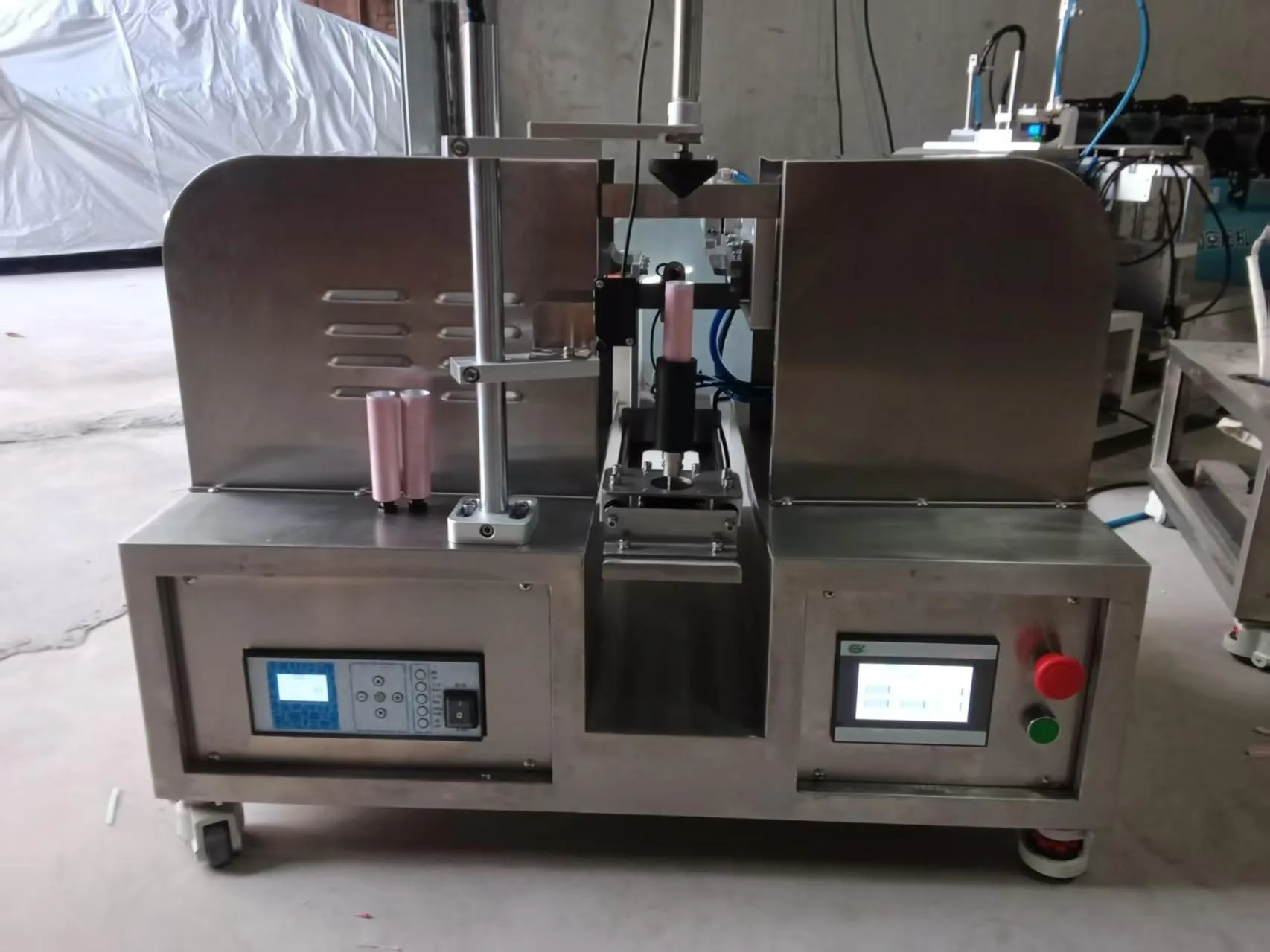
The TY-001 is a compact, high-performance semi-automatic ultrasonic tube sealing machine built for plastic and laminated tubes used in cosmetics, pharmaceuticals, food and industrial products. Tubes are loaded by hand, while colour-mark detection, ultrasonic sealing and tail trimming are all carried out automatically under PLC control with a touch-screen HMI.
Because the tube tail is closed by an ultrasonic weld and then trimmed, this machine is also sold as an aluminium tube folding machine (tail crimping machine) — if that is the term you use, this is the model you are looking for.
Sealing is achieved with high-frequency ultrasonic vibration applied at the interface where the tube tail is to be closed. The vibration generates local heat that melts the tube wall, and the sealing head applies pressure at the same time so the layers fuse into a solid molecular bond. Because the heat is generated right at the joint, the surrounding area stays comparatively cool, and no glue, hot air or external heat source is required.
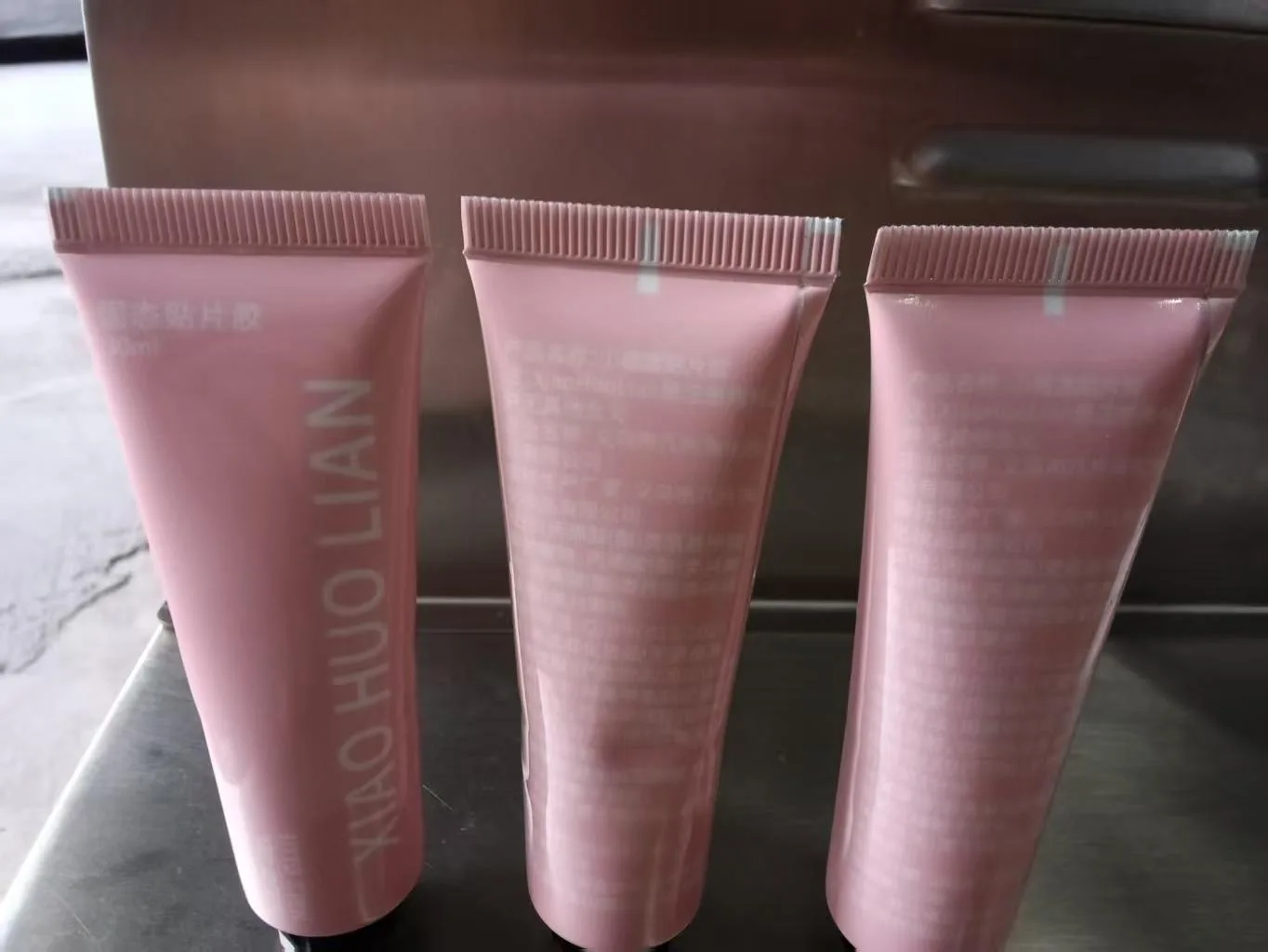
A photoelectric colour-mark sensor reads the registration mark printed on each tube, so the seal line and any printed date or batch code stay in exactly the same position from tube to tube. The sealed tube is then trimmed automatically, leaving a clean, uniform tail with a decorative crimp pattern.
Built for Stable, Repeatable Tube Sealing
Five Steps from Tube to Finished Seal
TY-001 Machine Parameters
| Model | TY-001 |
| Machine type | Semi-automatic ultrasonic tube sealing machine (single station) |
| Control system | PLC + touch screen HMI |
| Operation | Manual tube loading; automatic colour-mark detection, ultrasonic sealing and tail trimming |
| Power supply | AC 220V |
| Total power | 3 kW |
| Air supply | 0.5 – 0.6 MPa |
| Air consumption | 6 Nm³/h |
| Production speed | 7 – 13 tubes / min (depends on tube material, product properties and manual loading speed) |
| Sealing height (tube length) | 50 – 260 mm |
| Sealing diameter | 15 – 50 mm |
| Machine body material | 304 stainless steel |
| Overall dimensions | Approx. L 860 × W 600 × H 700 mm |
| Net weight | Approx. 100 kg |
Dimensions and weight are for reference; the delivered machine prevails. Production speed depends on tube material, product properties and the operator’s loading speed.
Components & Brands
| No. | Component | Qty | Brand |
|---|---|---|---|
| 1 | Touch screen + PLC all-in-one controller | 1 | Haichuang |
| 2 | Colour-mark photoelectric sensor | 1 | Huayifeng |
| 3 | Switching power supply | 1 | MEAN WELL |
| 4 | Pneumatic components | Several | Domestic brand |
| 5 | Intermediate relay | Several | CHINT |
| 6 | Mould assembly | 1 set | In-house developed |
| 7 | Air tubing | Several | Domestic brand |
| 8 | Fittings / connectors | Several | Domestic brand |
| 9 | Magnetic switch | Several | Domestic brand |
| 10 | Stepper motor | — | Xingbo |
Tube Range & Materials
The machine seals single-layer plastic tubes as well as laminated tubes with an aluminium or multi-layer barrier, including PE, PP and aluminium-plastic composite tubes. Different tube diameters and lengths are handled by changing the mould assembly, and custom moulds can be developed for special tube shapes.
Industries & Products
Product Photos
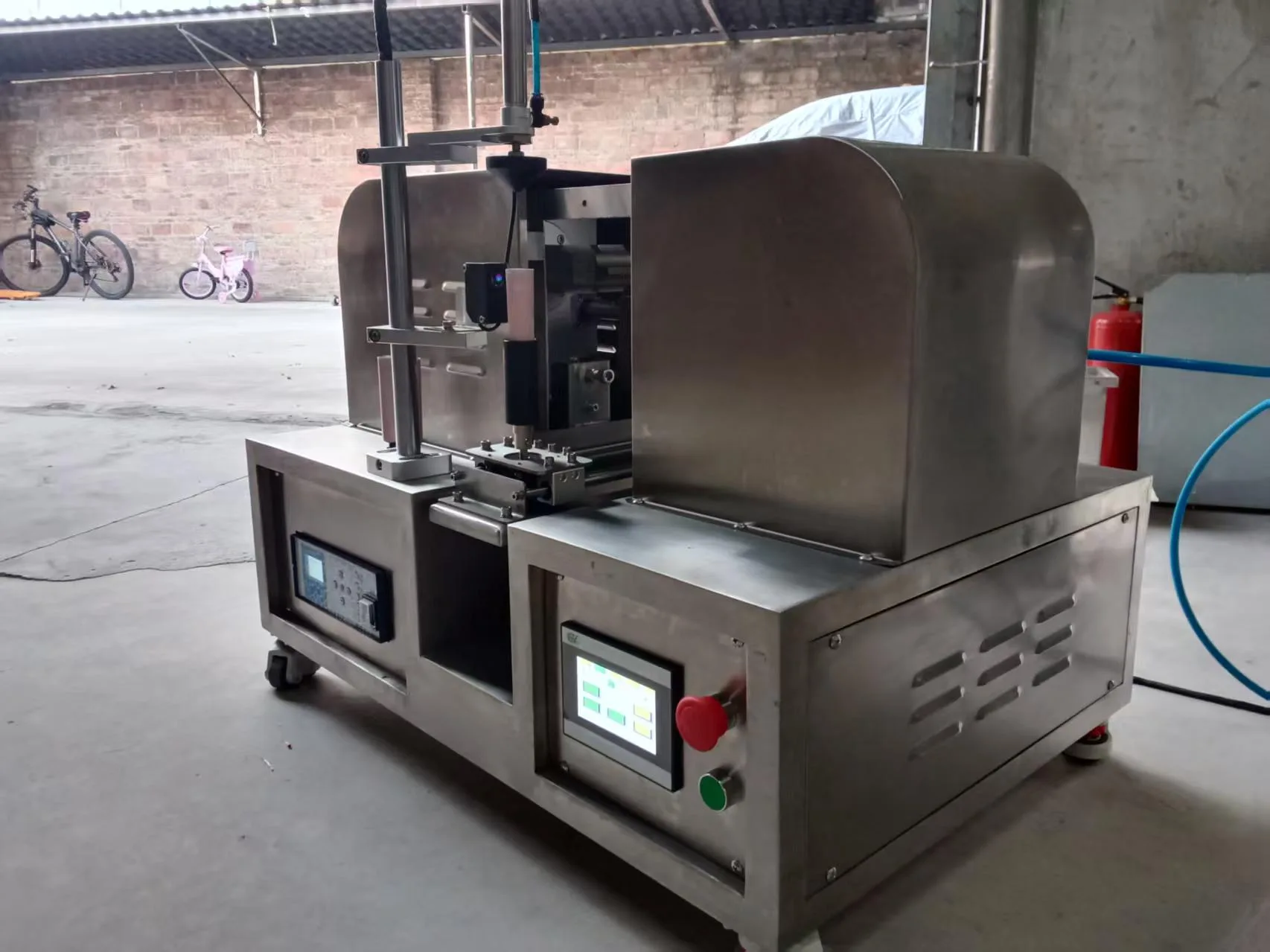
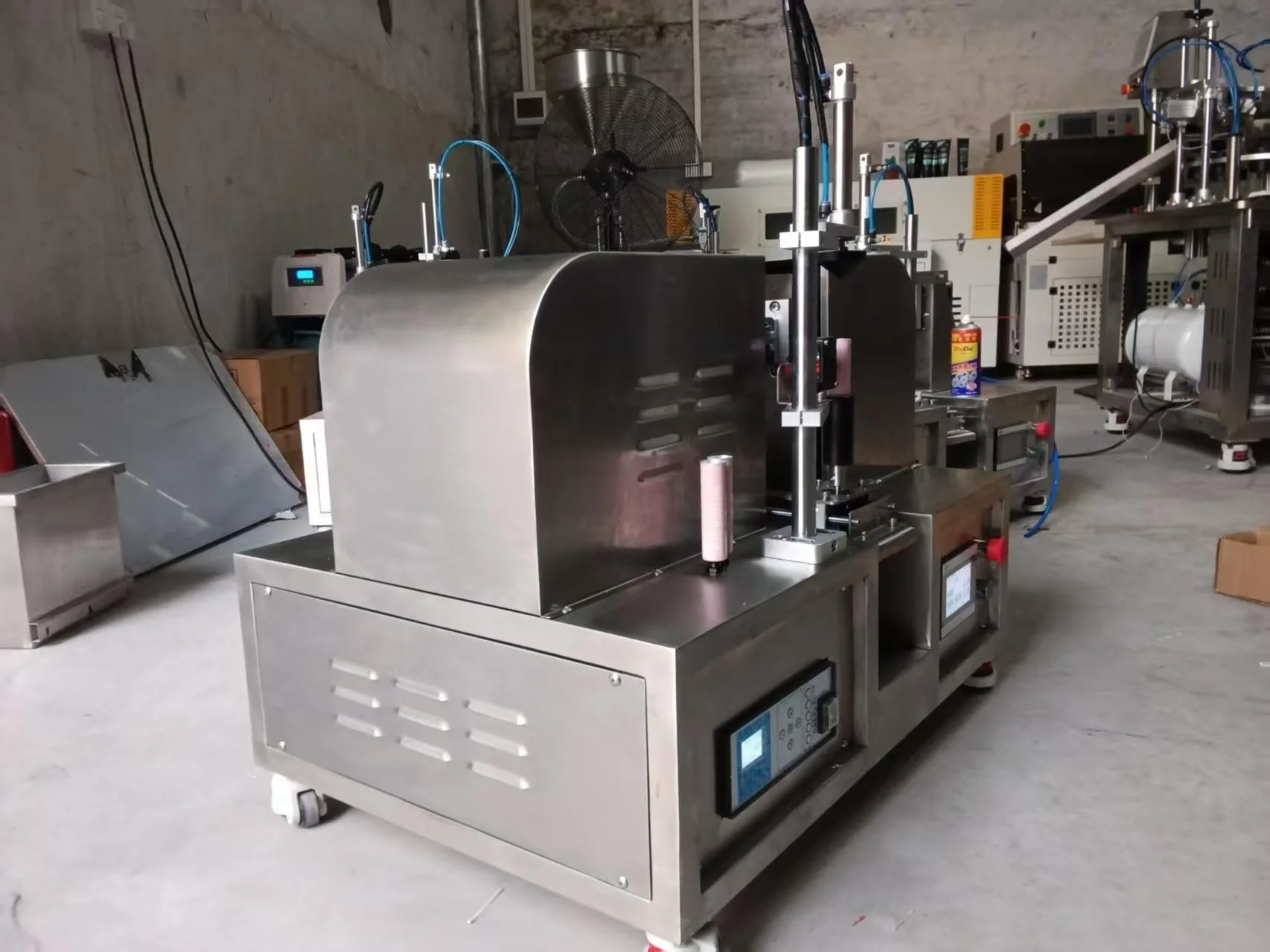
See the TY-001 in Operation
What Makes This Machine Different
- In-house mould development — moulds are designed and made in house, so they can be tailored to your tube diameter, length and shape.
- Branded electrical components — a MEAN WELL switching power supply and CHINT relays help keep the machine running stably over the long term.
- Simple to operate — all parameters are set on the touch screen, so a new operator can be trained quickly.
- Clean, strong seals — ultrasonic welding produces a neat, burr-free seal with a decorative crimp in a consistent position.
- Compact and mobile — about 860 × 600 × 700 mm and 100 kg, fitted with castors for easy repositioning.
Where it fits in a line
TY-001 is a sealing station, not a filling machine — the most common misunderstanding about this model, and the one that causes the most wrong enquiries. Placing it correctly in a line also explains why its 7–13 tubes per minute is a sealing rate rather than a line rate: the machine next to it decides your real output.
| Stage | What happens | What it needs from you |
|---|---|---|
| Upstream | Tubes arrive already filled — an operator fills them at a bench filler, or a separate filling machine feeds this station. TY-001 never touches product. | A filled-tube tray within the operator’s reach, and somewhere to stack the empty tray |
| This machine | One tube at a time: the operator seats it in the fixture, the machine reads the eye mark, welds the tail ultrasonically, trims it and releases the tube. | One operator, AC 220 V, 0.5–0.6 MPa air |
| Downstream | Sealed tubes are inspected and cartoned — by hand into trays, or into a cartoner if you already run one. | Bench space about the size of two crates, for cooling and inspection |
| Optional | Date or batch coding. A ribbon or ink coder mounts at the sealing station, so the code is applied while the tube is still held in the fixture. | The code format, and where on the tail it has to sit |
Installation: what the site has to provide
- Power — AC 220 V, 3 kW. Tell us the supply you actually have when ordering, so the machine is wired for it rather than adapted on site.
- Air — 0.5–0.6 MPa, roughly 6 Nm³/h. A small workshop compressor with a dryer is enough — moisture in the line is one of the quiet causes of inconsistent welds.
- Floor — Approx. 860 × 600 × 700 mm and 100 kg on castors. A normal workshop floor is fine, and the machine can be moved between benches without equipment.
- Environment — No water and no drain needed. Keep the machine and the tube stock at the same temperature — cold tubes weld differently from warm ones, and the difference shows up as a batch that will not run to the same recipe.
Changeover: what changes with a new tube or a new product
- Tube diameter, 15–50 mm — the fixture and the sealing jaw change; each diameter band uses its own set, supplied against your tube drawing.
- Tube length, 50–260 mm — set on the touch screen. No parts change.
- Tube material — plastic and aluminium-plastic laminated tubes need different energy and hold time; both recipes stay saved in the HMI, so switching back and forth does not mean re-tuning.
- Eye-mark position — if new artwork moves the mark, the registration offset is re-taught once and saved against that tube.
Because there is no filling step, the rate on the nameplate is a sealing rate. If two people fill and one seals, the sealer is not your bottleneck; if the same person does both, it usually is. That single distinction decides whether this model is right for you — the comparison guide works through the break-even. For what the crimp itself is doing, see what an aluminium tube folding machine actually does.
Troubleshooting: what the symptom tells you
Most seal faults on a semi-automatic ultrasonic sealer come from the tube rather than the machine, and the pattern of the fault tells you which. Work down this list before touching the parameters — the first two cause more wasted tube stock than everything else combined.
Symptoms are listed in the order they actually occur in production. If two or more appear together on the same lot, suspect the tube before the machine.
Semi auto tube sealing machine, tube sealing system — same machine
Buyers ask for this unit under several names: a semi auto tube sealing machine, a semi-automatic tube sealer, an ultrasonic tube sealing system, or simply “the semi-auto”. The name follows the buyer’s own line drawing; the cycle does not. Tube into the nest, the ultrasonic horn welds the tail, the knife trims the flash, the sealed tube drops out.
A tube sealing system is more than the frame: it is the tube construction (ABL, PBL or plain PE), the seal geometry, the horn and anvil, and the weld parameters held for that tube. On the TY-001 the hardware covers Ø15–50 mm tubes of 50–260 mm length; moving between laminated and all-plastic stock changes the parameters and the jaw, not the machine.
Questions buyers ask before ordering
Does the TY-001 fill the tube as well as seal it?
What is an aluminium tube folding machine, and is this the same thing?
Which tube materials and sizes can it handle?
What output can one operator reach?
What does the machine need from the factory?
Can we send our own tubes for a test before ordering?
Related guides
- Ultrasonic vs heat sealing — which process your tube needs
- How to specify a tube sealing machine
- Fill accuracy: what ±1 g and ±1% really mean
- How to inspect tube seal quality
- Small-batch filling for startups & pilots
Request a Quotation
Tell us your tube diameter, tube length and required output, and we will recommend the right configuration — including a custom mould if needed. Sample testing is welcome.
xiexuetao@htkcai.com